

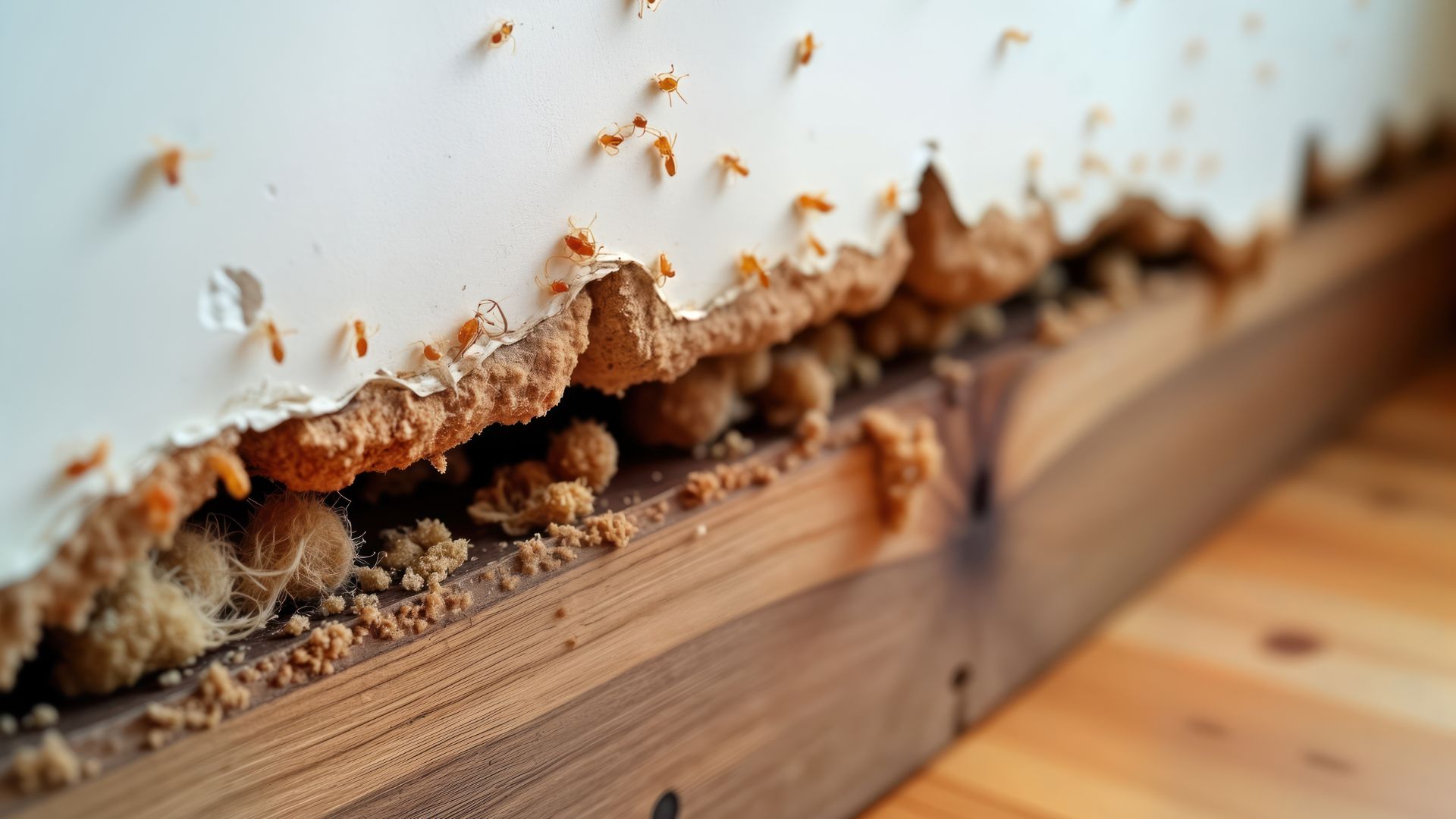
Most Washington homeowners don’t find out they have termites until the damage is already done. Termites work quietly inside walls, floors, and foundations, often active for months before anything visible surfaces. Catching signs of termites early is what separates a manageable treatment from a costly structural repair.
What Do Termites Look Like
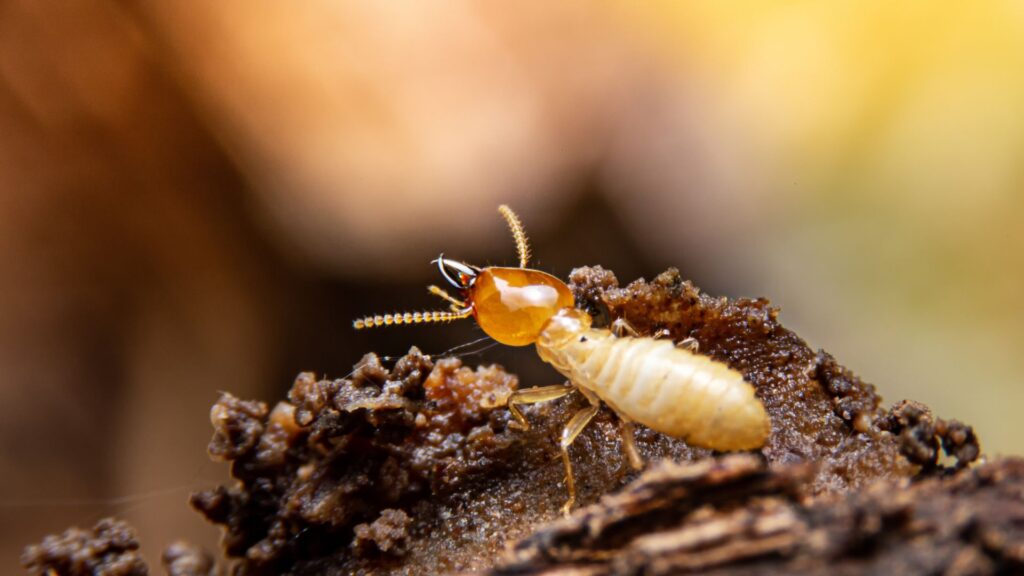
Termite
Knowing what you’re looking for makes spotting signs of termites in a house much easier. Workers, the most common type you’d encounter, are soft-bodied, wingless, and range from creamy white to pale yellow. Swarmers are darker, winged, and often mistaken for flying ants.
Here’s how to tell them apart: flying ants have a pinched waist and uneven wing lengths. Termite swarmers have a straight body and two sets of equal-length wings. Finding discarded wings near windowsills or door frames is one of the clearest general termite signs you’ll come across and a strong indicator that a colony is already nearby.
Types of Termites and Their Signs by Location
Washington is home to several different termite species, each with distinct behavior and preferred environments. Subterranean termites nest underground and travel up to reach wood, making foundations, crawl spaces, and wooden framing their primary targets.
Dampwood termites prefer wood with high moisture content and tend to concentrate in areas affected by water damage or poor drainage.
Understanding where termites establish themselves around a property helps you focus your inspection. Subterranean species attack from below, while dampwood termites work their way into wood that stays consistently wet. Identifying which species you’re dealing with shapes every step of treatment that follows.
How to Tell if You Have Termites
Most termite activity stays out of sight, but signs of termite damage do surface if you inspect carefully. Start by setting aside time to walk through your home with a flashlight, something most homeowners skip until a visible problem forces their hand.
Tap along baseboards, door frames, and wooden wall panels. Wood that sounds hollow has likely had its interior consumed. Bubbling or uneven paint not tied to a moisture source often indicates termites feeding just beneath the surface. Floors that feel spongy underfoot or tiles that shift without an obvious cause frequently point to subterranean activity below.
Pay attention to doors and windows that suddenly stick or become hard to open. Termites feeding on wooden frames cause wood to warp, which throws off how they fit. Check your attic and basement too, since both spaces give termites easy access to structural wood with little foot traffic to disturb them. Fine sawdust-like material collecting near wood surfaces without an obvious source is worth investigating right away.
Specific Termite Damage Indicators
Certain signs of termite damage in wood are specific enough to confirm activity on their own:
- Termite droppings: Drywood termites push frass (fecal pellets) out of small kick-out holes in wood. Pellets are tiny, ridged, and typically collect near baseboards, furniture legs, or walls.
- Termite eggs: Rarely visible without removing damaged wood, termite eggs appear as small, white, translucent ovals grouped inside wood chambers.
- Mud tubes: Subterranean termites build pencil-width tunnels along foundations and crawl space walls to travel between soil and wood. Mud tubes are one of the most reliable indicators of an active subterranean colony.
- Termites in furniture: Drywood termites infest wooden furniture directly without needing soil contact. Check chair legs, table frames, and cabinetry for frass piles or small exit holes.
- Termite wood damage: Wood that crumbles easily, breaks apart in layers, or shows a hollowed honeycomb pattern inside points to active termite wood damage and needs immediate attention.
What to Do if You Find Termite Signs
Act quickly once you identify any of these indicators. Note where you found the activity and how far it appears to have spread. Avoid disturbing the site since pushing an active colony deeper into the structure makes treatment significantly harder.
DIY termite removal products, such as store-bought sprays or boric acid, can suppress surface-level activity, but they rarely reach the colony itself. Subterranean colonies extend several feet underground. Drywood colonies nest inside wood members far from where frass appears. Surface treatments miss the source almost every time.
A professional inspection goes beyond what you can see. Technicians use moisture meters, probing tools, and firsthand knowledge of termite behavior in Washington’s climate to trace activity back to its origin. They assess not only where termite damage is visible but also where conditions make expansion likely.
Pairing that inspection with a proven termite management and control plan is what closes the gap between surface treatment and lasting results.
Document what you find, take photos, and schedule an inspection without delay. Every week an active colony goes untreated, it works deeper into your home’s structure.
Termite Extermination Services from Sentinel Pest Control
Catching signs of termites early in your Washington home makes treatment more manageable.
Sentinel Pest Control identifies termite activity specific to Washington’s climate and building types, from subterranean colonies pushing up through crawl spaces to drywood termites settling into wooden furniture and framing. Treatment is built around what’s actually active in your home, not a one-size approach.
If you’ve noticed something that concerns you or want a professional inspection before a small problem grows, contact Sentinel Pest Control and get a clear picture of what’s happening in your home.