

Grab a wasp bomb, set it off, and the problem goes away. That’s the idea, at least. In practice, it rarely works that way — and in some situations, it makes things considerably worse.
What Is a Wasp Bomb and How Does It Work?
Set off near a wasp problem, a bug bomb releases a pressurized pesticide fog into the surrounding air. You leave the space, let the product disperse, and return once it’s settled. The concept borrows from flea and cockroach foggers, applied to a very different pest.
Most wasp bombs rely on pyrethrins or pyrethroids — compounds that affect the nervous system of insects on direct contact. That last part is important. For the treatment to work, wasps need to be present in the treated space and directly exposed as the fog moves through.
That’s where the first problem appears. Wasps don’t live in open air. They nest — inside attics, wall voids, eaves, and ground cavities. A fogger releases particles that drift through a room. It doesn’t penetrate a nest structure.
Wasp Bomb vs. Wasp Fogger: What’s the Difference?
The terms get used interchangeably, but there’s a practical difference. A fogger disperses product as a fine mist into open space. A directed wasp and hornet killer spray delivers a concentrated stream aimed at a specific target. Different tools, different applications.
Products like the Hot Shot fogger are built for indoor use in sealed spaces. A wasp smoke bomb works differently again — it releases dense smoke for outdoor nest suppression, not elimination.
None of them are built to penetrate a nest cavity and reach the queen. Without reaching the queen, the colony survives.
Why Wasp Bombs Often Make the Problem Worse Indoors
Indoor fogging carries real risks that go beyond ineffectiveness. Residue settles on counters and food preparation surfaces, which is why most product labels require covering or removing all food and dishes before use, plus thorough ventilation afterward. That alone makes indoor use more complicated than most people expect.
The bigger issue is scatter. Wasps that aren’t directly hit by the fog sense the irritant and disperse — deeper into wall voids, into adjacent rooms. The nest doesn’t die. It relocates, or surviving workers regroup once the product dissipates.
Attic situations add another layer of risk. Fogger residue in a confined space with insulation and limited airflow can linger and create inhalation hazards if the area isn’t properly ventilated. It’s one of the more common situations where a DIY attempt turns into a professional call anyway, just with more damage done in the meantime.
When Wasp Bombs Fall Short: Why DIY Treatments Miss the Nest
The core problem is the same whether you’re targeting a shed, a wall void, or a colony under the deck. Will a bug bomb kill wasps? It can kill exposed foragers. It won’t eliminate the nest.
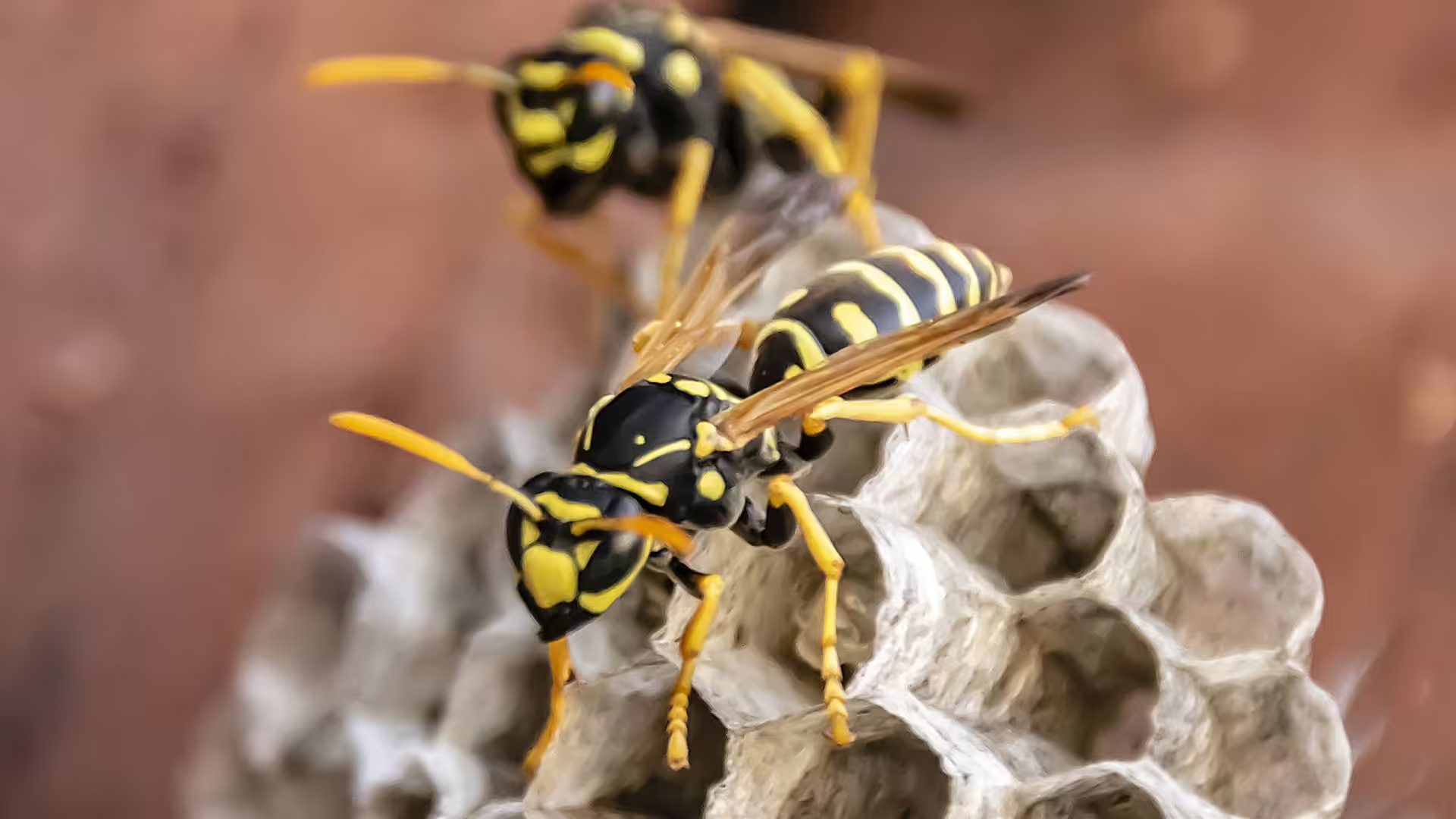
Wasps build layered paper nests with a protective outer casing. The queen and developing larvae sit deep inside, insulated from surface-level treatments. Workers return from the outside and don’t carry pesticide residue back into the nest the way ants carry bait. That transfer mechanism simply doesn’t exist with wasps.
What actually works is a directed, residual product applied at the nest entrance during low-activity periods — typically dusk or dawn, when most workers are inside. Even then, a nest inside a wall void or beneath decking requires drilling access points and applying dust or foam formulations that penetrate the cavity. That’s not a fogger job.
A general perimeter spray on a live nest won’t resolve an infestation. Understanding how to get rid of wasps effectively means starting with the nest, not the workers flying around it.
What Actually Eliminates a Wasp Nest for Good
Species and location determine everything. Paper wasps, yellow jackets, and bald-faced hornets behave differently and need different approaches.
Yellow jackets nesting underground need product delivered directly into the ground entrance. Aerial paper wasp nests respond to direct spray at night. Wall void nests need dust treatments injected through access points. Same general pest category, completely different execution.
Timing matters too. Treating in fall after colony populations peak — or in early spring before a queen establishes a full nest — produces better outcomes than mid-summer treatments when colonies are at maximum size and aggression.
Sentinel’s stinging insect management process covers all nest types and locations, including wall void and attic situations that DIY products can’t safely reach. Technicians identify the species first, then apply the right product in the right location.
If you’ve spotted activity around your roofline or foundation and want to know what you’re dealing with before it gets harder to treat, wasp nest removal in Seattle and across Western Washington is exactly what Sentinel handles.
Sentinel Pest Control: Safe Wasp Removal in Western Washington
The nest is still there regardless of how many foragers a wasp bomb knocks down. If wasps have built inside your attic, walls, or under your deck, fogging the space doesn’t change that.
Contact Sentinel today and get a treatment that reaches the colony, not just the wasps you can see.