

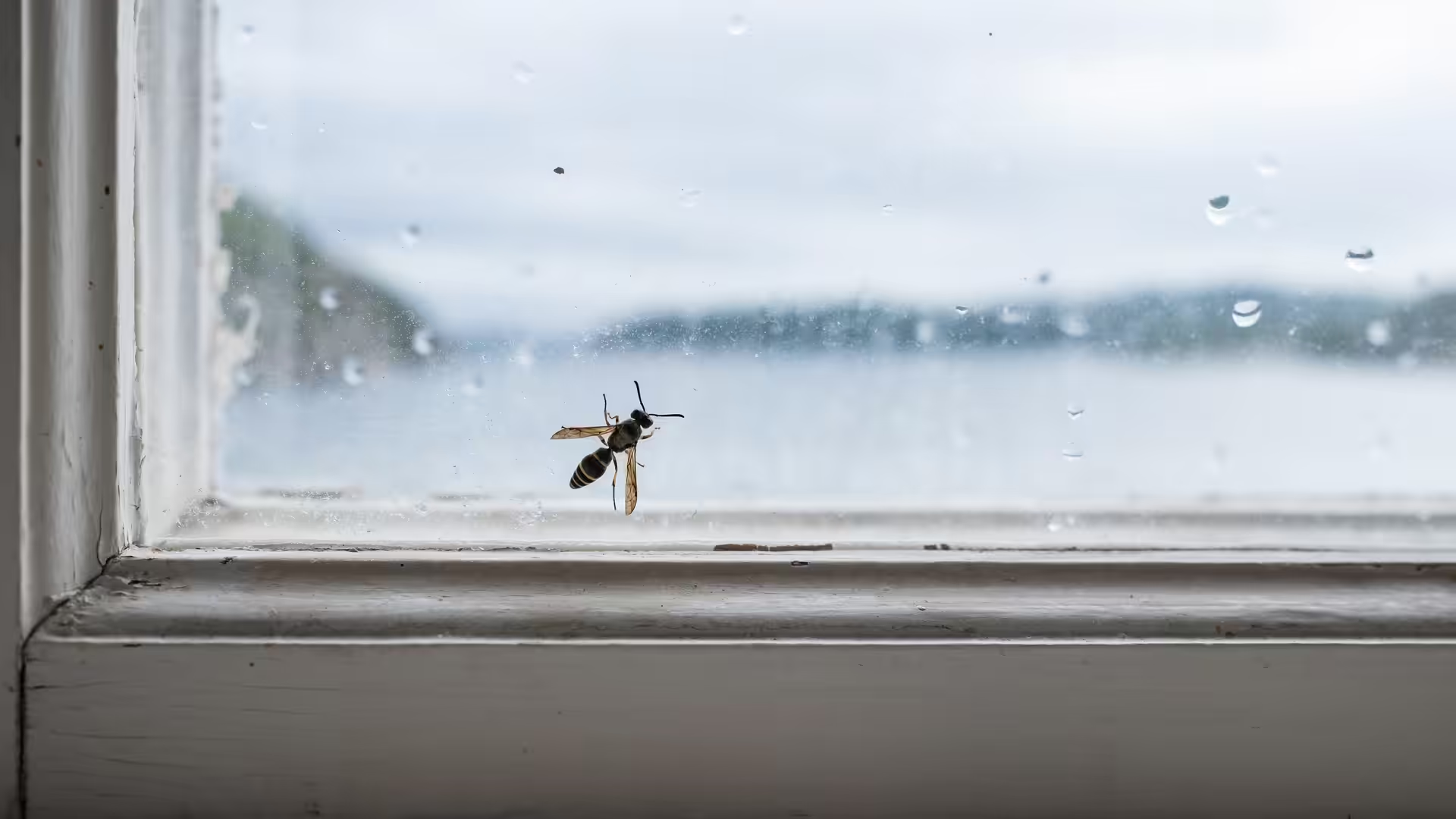
You hear it before you see it. A buzz against the window, then another somewhere across the room. A wasp inside puts everyone on edge fast, and the wrong move turns a nuisance into a sting.
How to get a wasp out of your house safely takes a calmer hand than most people use the first time. Below are the steps that work and the signs that tell you there’s more than one wasp in play.
Why Wasps End Up Inside Your Home
Most wasps in the house didn’t pick your home on purpose. They came in for a reason that’s almost always traceable, and the timing matters more than people realize.
Open Windows, Entry Gaps, and Why May Is the Worst Month for It
Two routes get wasps inside more often than any other. An open window with a torn or missing screen handles most of it. A door left ajar while you carry something in handles the rest. Older Washington homes leak differently, through small gaps around vents and soffits, where queens scouting for nest sites in spring find easy access.
May is the worst month for it across Western Washington. Overwintered queens emerge from sheltered spots in sheds and attics as soon as temperatures hold steady in the mid-60s. Each one is looking for somewhere to start a colony, and your eaves or attic vent reads as ideal real estate.
A queen that wanders inside through an open patio door isn’t there to sting. She’s looking for somewhere quiet to build.
If a wasp flew in through the window gaps in late spring, you’re probably looking at a queen rather than a worker. By July or August, a single indoor wasp is more likely a worker tracking something sweet on the counter. Entry points and timing both matter, and both lean heaviest in spring.
How to Get a Wasp Out of Your House Without Getting Stung
Wasps don’t want to be inside any more than you want them there. They’re trying to get out, and the fastest way to help them is to give them an exit and the right cue to take it.
The 3-Step Method That Actually Works
Knowing how to get a wasp out of your house in 3 steps relies on light and patience more than force:
- Close interior doors first. Trap the wasp in one room before it explores the rest of the house. A bedroom or kitchen with a window facing outside works best.
- Open the window all the way and turn off every light in that room. Wasps fly toward the brightest spot, and on a sunny day, that’s the window. At night, switch on a porch light outside the window so the wasp moves toward it.
- Leave the room and close the door behind you. Give it five to ten minutes. Most wasps find the open window on their own once nothing else is competing for their attention.
For a wasp in your bedroom at night, the same method works with one tweak. Switch the bedroom light off, open the window, and turn on the porch light outside. Within minutes, the wasp commits to the brighter source.
What Not to Do When a Wasp Is Trapped Inside
A wasp trapped inside the house is stressed and looking for an exit it can’t find. A cornered wasp stings faster than a confused one. The mistakes that lead to stings are almost always about panic and speed.
What to skip:
- Don’t swat it mid-flight. A miss can knock the wasp onto your arm or into your hair, and stinging is its default response when pinned to skin
- Aerosol bug killer doesn’t belong indoors. Most wasp and hornet sprays are labeled for outdoor use, and the residue lingers on surfaces longer than the wasp does
- A wasp bomb is the wrong tool for one wasp. Foggers are built for nest treatment, and setting one off in a bedroom creates more cleanup than results
- Trapping it under a glass without a plan rarely ends well. The wasp gets out eventually, and a stressed one sliding free under your hand is the worst version of this
One wasp inside your house isn’t unusual. Two or three in the same week tells a different story. Getting wasps out of the house becomes a different question once they’re coming from inside the structure rather than wandering in from outside.
Watch for these signs:
- More than two sightings in the same week, especially in one room
- Look for activity at upstairs windows or in attic-adjacent rooms
- A spot on the exterior wall where wasps come and go from one point
- Listen for faint papery scratching in walls or ceilings, especially at night
Yellowjackets gravitate toward wall voids and attic spaces, and they’ll claim old rodent burrows near foundations if they find them. By August, an unchecked nest can hold a few thousand workers. Reaching it yourself means cutting drywall, and a disturbed nest stings more than once.
Our guide on how to get rid of wasps covers outdoor nest treatment. For nests around Seattle or the surrounding area, wasp nest removal handles the heavier work, and our stinging insect management page covers what ongoing prevention looks like.
Wasps Keep Finding Their Way In? Sentinel Pest Control Finds Out Why
More than one wasp indoors in a week usually points to a nest somewhere on or near your house. Finding it early is the difference between a quick treatment and a tear-out later. Reach out to Sentinel Pest Control and we’ll track down where they’re getting in.