

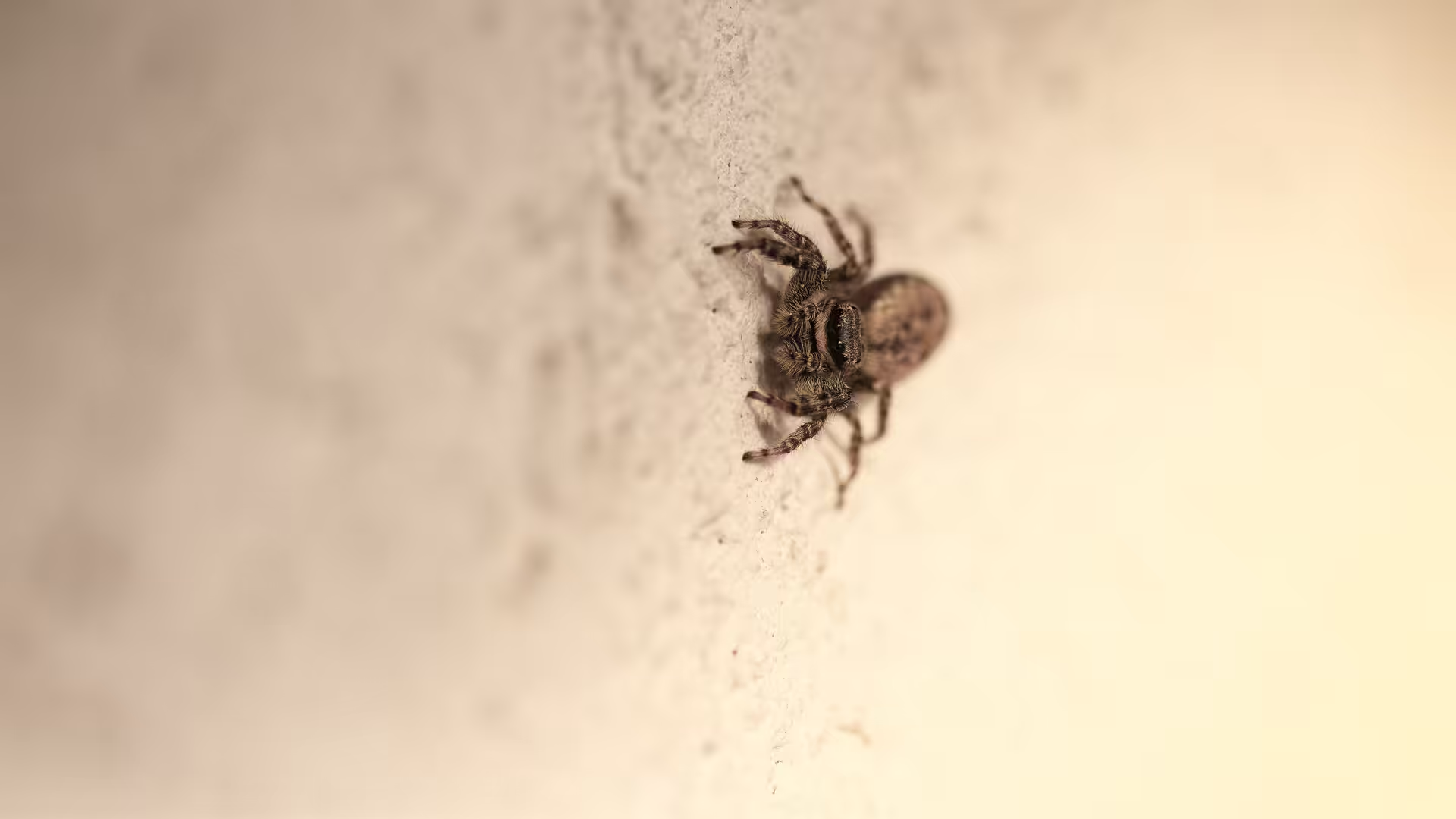
The short answer: jumping spiders are venomous, not poisonous. Their venom targets tiny insects, not humans. Bites are rare, mild, and resolve within 24 hours. For healthy adults and pets, jumping spiders pose no meaningful threat.
Most people spot one on a windowsill, step back, and immediately wonder whether they should be worried. They shouldn’t. But the question, “Are jumping spiders poisonous?” isn’t quite the right one, and the distinction matters more than most people realize.
These compact hunters aren’t just harmless. They’re active pest controllers, capable of leaping up to 50 times their own body length to catch flies, gnats, and mosquitoes.
Autumn is approaching, and spiders will seek winter shelter across the South Sound. Understanding what you’re actually dealing with helps you make smarter decisions about which spiders to leave alone and which situations warrant a call.
Are Jumping Spiders Poisonous or Venomous?
Venomous and poisonous aren’t interchangeable, and the difference changes the answer completely. Poisonous creatures are dangerous when touched or eaten. Think poison dart frogs. Venomous animals inject toxins through a bite or sting. Nearly all spiders are technically venomous, but that doesn’t make them dangerous to humans.
The venom that jumping spiders carry is calibrated specifically for tiny prey, such as flies and gnats. For humans, a bite feels similar to a minor bee sting at worst. Bites are genuinely rare, too, because these spiders are curious by nature rather than aggressive. When they encounter something as large as a human, they are far more likely to hop away.
Does That Mean Jumping Spiders Are Completely Safe?
For healthy adults, yes. Jumping spiders have small fangs that struggle to penetrate human skin. When a bite does occur, usually when a spider is accidentally trapped against the skin, symptoms stay local. Minor redness, a small bump, mild swelling. Nothing that requires medical attention. Symptoms resolve on their own within 24 to 48 hours.
Pets are equally safe. The venom is designed for insects weighing mere milligrams and poses no meaningful risk to cats or dogs, even if one is consumed.
How Do You Identify a Jumping Spider?
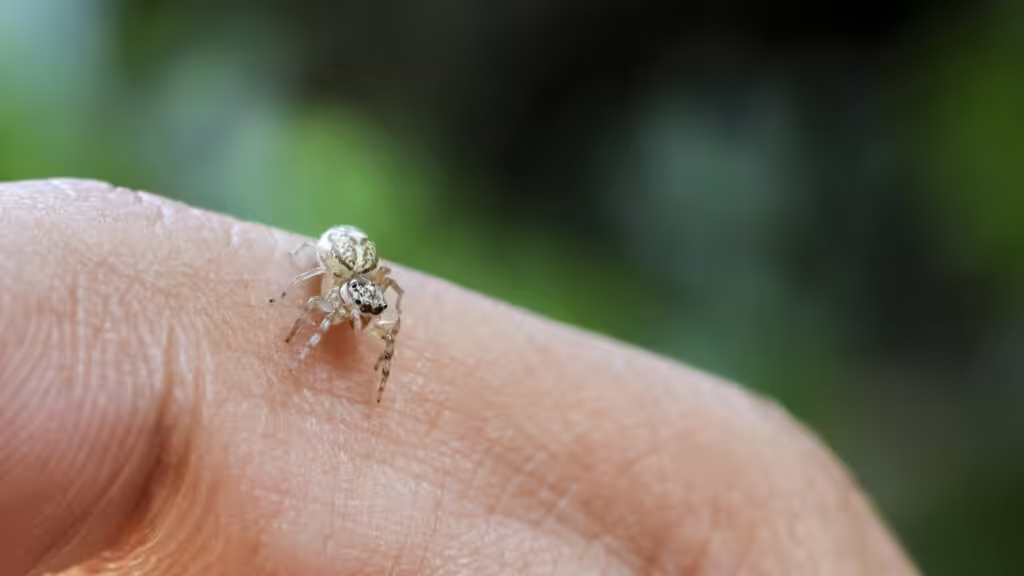
Once you know what to look for, jumping spiders are hard to mistake for anything else. They’re compact, typically between 4 and 20mm, with large forward-facing eyes that give them exceptional vision and a distinctive appearance no other common house spider shares.
A few characteristics that set them apart:
- Large front-facing eyes that give them an almost alert, curious expression
- Short, stocky legs built for jumping, not the long, spindly legs of web-builders
- Fuzzy bodies, sometimes with iridescent markings in green, blue, or bronze
- Quick, jerky movement during daylight hours rather than stillness in a web
Unlike web-building spiders that prefer dark, undisturbed corners, jumping spiders gravitate toward sunny spots where flying insects collect. South-facing windows, glass doors, and outdoor furniture in direct sun are common spots to find them in Washington homes through late summer and early fall.
How Are They Different From Dangerous Spiders?
Black widows, the species worth taking seriously in Washington, behave nothing like jumping spiders. They build webs and stay hidden during the day. They prefer undisturbed outdoor spots like woodpiles and utility boxes, and they look nothing like a jumping spider.
A jumping spider watches you back. It turns to face you directly when you approach and moves constantly during daylight. If a spider is small, fuzzy, and seems to be watching you, it’s almost certainly a jumping spider.
Are Jumping Spider Bites Medically Significant?
No. Most suspected spider bites turn out to be bites from other insects entirely, and jumping spider bites specifically are not considered medically significant. When they do occur, symptoms are mild and localized. A small red bump, maybe some minor swelling, nothing that spreads or requires treatment. Healthy individuals don’t need medical intervention.
What Should You Do If You’re Bitten?
Soap and water first. Then a cold pack if there’s swelling, and an over-the-counter antihistamine if it itches. That covers it for most people. If hives start spreading, breathing becomes difficult, or swelling moves well past the bite site, seek medical attention. Those reactions are extremely uncommon with jumping spider bites, but worth knowing about.
Should You Remove Jumping Spiders From Your Home?
That’s up to you, but there’s a reasonable case for leaving them alone. A single jumping spider consumes hundreds of flying insects over its lifetime. Mosquitoes and flies are among them, and those insects pose more actual risk to humans than the spider does. They don’t build messy webs across living spaces. They’re active during the day and mostly stay near windows and light sources.
If you’re finding them throughout the home in numbers, that’s worth addressing. Not because the spiders are dangerous, but because large indoor populations often indicate an insect pressure problem at the perimeter that’s drawing them in. Our spider management service looks at both.
When Should You Call a Professional?
On their own, jumping spiders don’t warrant a call. The situations that do are finding large numbers of spiders indoors, discovering egg sacs in living spaces, or identifying a species that actually poses a risk. Black widows are the primary concern in Washington.
Our approach targets the conditions attracting spiders rather than individual sightings. Consistent spider activity across multiple areas of your home typically signals insect pressure at the perimeter that a targeted exterior treatment can address.
For a full picture of what’s active on your property, our pest identification page covers the species most commonly found in Washington homes.
Ready to get it sorted? Call us at 253-538-2576 or contact us online, and we’ll take a look.
FAQ: Jumping Spiders – Venomous vs. Poisonous
Are jumping spiders poisonous or venomous?
Venomous. Poisonous means dangerous when touched or eaten. Venomous means the animal injects toxins through a bite or sting. Jumping spiders are venomous, but their venom targets tiny insects, not humans, and poses no meaningful risk to healthy people.
Is there a difference between venomous and poisonous spiders?
Yes, and it matters. A poisonous spider would be dangerous to eat or touch. A venomous spider injects venom through a bite. Nearly all spiders are venomous in the technical sense, but most, including jumping spiders, have venom that can’t cause harm to humans.
Can a venomous jumping spider still hurt you?
Rarely, and mildly. A jumping spider bite produces localized redness and minor swelling at most, similar to a mosquito bite. It resolves within 24 to 48 hours without treatment. Jumping spiders are not aggressive, and bites almost always happen when the spider is accidentally trapped against the skin.
Are jumping spiders more dangerous than other house spiders?
No. Jumping spiders are among the least concerning spiders found in Washington homes. The species worth taking seriously here is the black widow, which is a web-builder, nocturnal, and looks nothing like a jumping spider.
Are jumping spiders venomous to dogs or cats?
No. Their venom is designed for insects and poses no risk to pets, even if a pet eats one.