

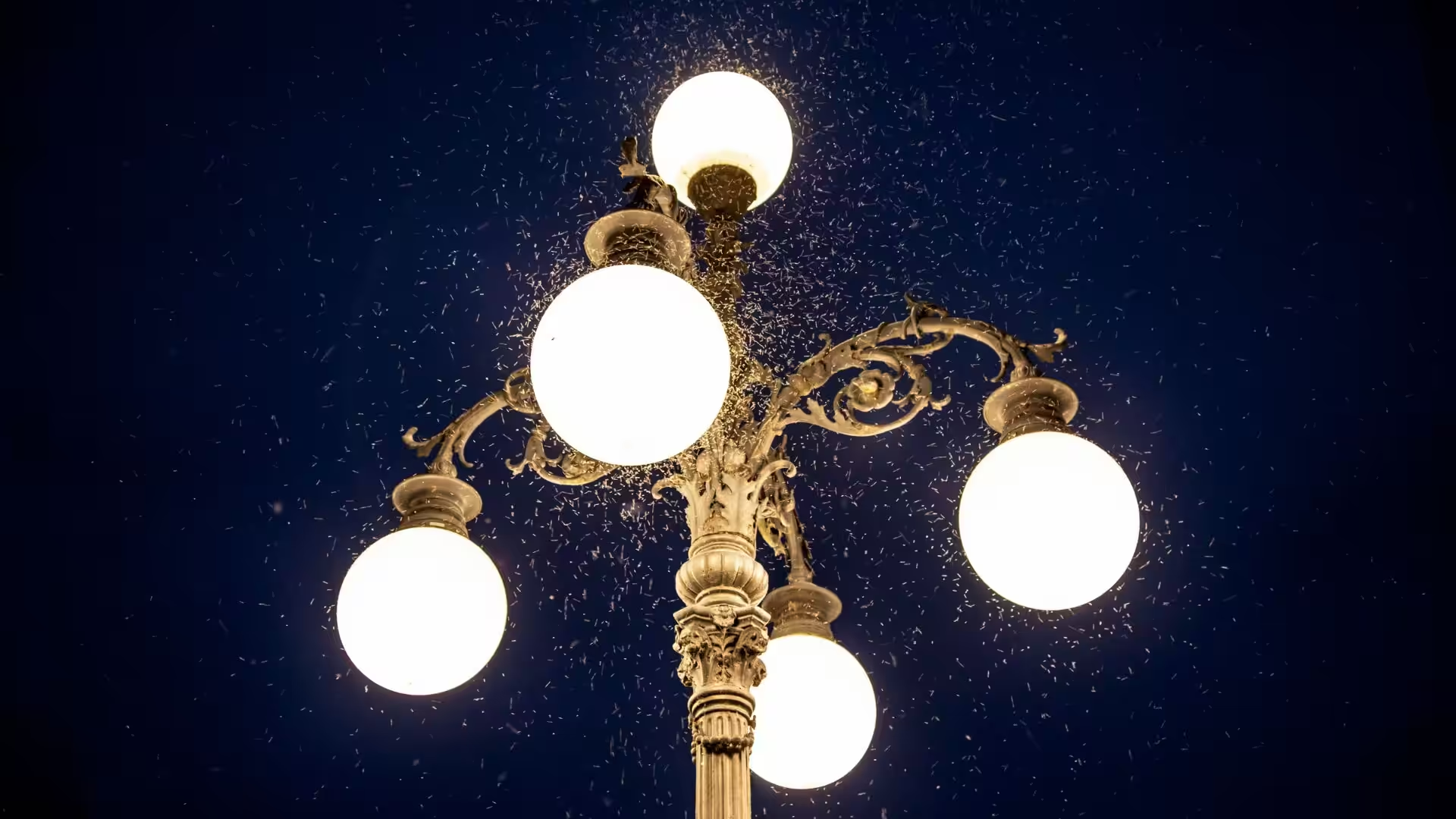
Yes, but light isn’t what drives mosquito behavior — it’s one factor in a stack that includes heat, carbon dioxide, and body chemistry. Understanding where it actually fits changes how you think about controlling them.
Why Are Mosquitoes Attracted to Light in the First Place?
Before artificial light existed, insects used the moon and stars to navigate, holding a fixed angle to natural light sources to maintain a straight path. Artificial light breaks that system. It pulls insects off course and toward the source instead.
Mosquitoes aren’t as strongly light-driven as moths. Light gets their attention, but it’s you standing near the porch light that makes them bite — your CO2, your heat, your body odor. The light concentrates them near your door. Your presence closes the gap.
Washington’s long summer evenings stretch the window of active mosquito behavior. Mosquitoes in this region are most active from dusk onward — exactly when outdoor lighting is on and most people are outside.
Does UV Light Attract Mosquitoes More Than Regular Bulbs?
Yes. UV wavelengths register more strongly in a mosquito’s visual range than warm or yellow-toned light does. Blue light falls into the same category — shorter wavelengths are more attractive than longer warm ones.
Switching outdoor fixtures to warm amber or yellow LEDs won’t eliminate mosquito activity, but it makes your porch a less appealing congregation point. At the margins, that matters.
What Colors Are Mosquitoes Actually Attracted To?
Visual contrast is how mosquitoes locate hosts, especially in low light. Dark colors — black, navy, dark red — stand out against open backgrounds and retain heat. That combination layers a thermal cue on top of the visual signal, making you easier to detect and warmer to land on.
Lighter tones don’t repel mosquitoes, but they register with less contrast and produce less surface heat. White, pale yellow, and light grey draw less attention consistently. Wearing lighter clothing during Washington’s mosquito season won’t keep you bite-free on its own, but it removes one of the cues they use to zero in on a target. Paired with other precautions, it makes a practical difference.
Do Bug Zappers Actually Work on Mosquitoes?
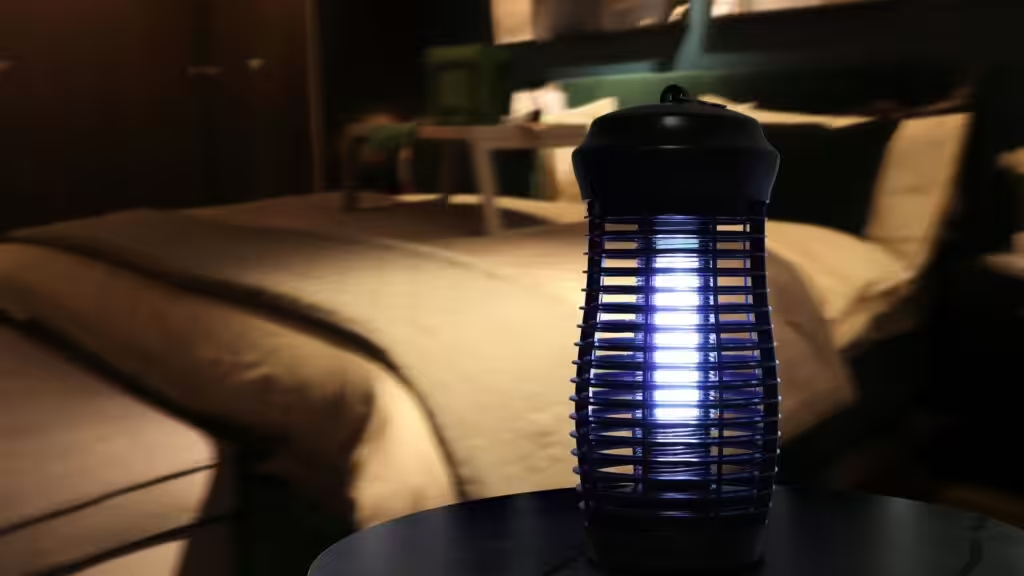
They pull in some, yes. UV light draws flying insects toward the grid, and mosquitoes are among them. The problem is that zappers are far more effective on beetles and moths than on mosquitoes specifically.
Mosquitoes prioritize CO2 and body odor over light. A zapper sitting on your patio competes directly with the carbon dioxide you’re exhaling and the heat your body produces — and it almost always loses. Most of what a standard bug zapper kills are insects that posed no threat to you anyway.
If mosquito control is your actual goal, a zapper alone won’t cut it. Traps that combine UV light with CO2 or attractant lures perform better. Even those work best as part of a broader pest control plan that targets where mosquitoes breed and rest. Killing what’s flying on a given night doesn’t touch the underlying population.
What Else Attracts Mosquitoes to Your Yard at Night?
Standing water is the foundation. Female mosquitoes need still water to lay eggs, and Washington’s rainfall creates plenty of opportunity throughout the season. Clogged gutters and low spots in the lawn are enough. So is an ornamental pond or a plant saucer that doesn’t drain.
Mosquito breeding sites are usually far closer to the house than people expect. Dense vegetation compounds the problem — adults rest in shaded, humid areas during the day and become active by evening. A yard with standing water and overgrown shrubs is working against you before you even turn a light on.
Carbon dioxide is the other draw mosquitoes don’t need light to follow. Every exhale broadcasts a signal detectable from a distance. Warm skin and sweat amplify it. Lighting choices matter at the margins, but they don’t override biology — a yard with active breeding sites will have mosquitoes no matter what color your porch light is.
Sentinel Pest Control: Mosquito Control for Western Washington Homes
Swapping a light bulb helps at the margins. It doesn’t address the breeding sites, the resting areas, or the population that’s already built up through the season.
Sentinel Pest Control targets mosquitoes where they actually live. If spending time outside in the evening has become more about swatting than anything else, reach out to Sentinel and let’s put a real plan in place.