

July is peak yellow jacket season in Washington, and if you’ve had a close encounter recently, you may be wondering whether the yellow jacket that stung you paid for it. It’s a fair question, and the honest answer is: it depends.
Whether a yellow jacket dies after stinging comes down to which member of the colony did the stinging. Workers and queens behave very differently, and understanding that difference matters when you’re trying to figure out how serious your nest problem actually is.
Do Yellow Jackets Sting More Than Once?
Most people assume yellow jackets work like bees: sting once and die. That’s not quite right. Yellow jackets don’t have barbed stingers the way honeybees do, which means they’re physically capable of stinging more than once. Whether they die after stinging depends entirely on their role in the colony.
The ones you’re most likely to run into near food, garbage, or a disturbed nest are workers, and they can sting repeatedly. If you’ve been stung several times in quick succession, that’s what happened.
When a worker stings, it releases a pheromone that signals other workers to attack. One sting near an active nest can become several within seconds. This part is what makes encounters so dangerous when a colony is close by.
Why Queens Can Sting Again but Workers Cannot
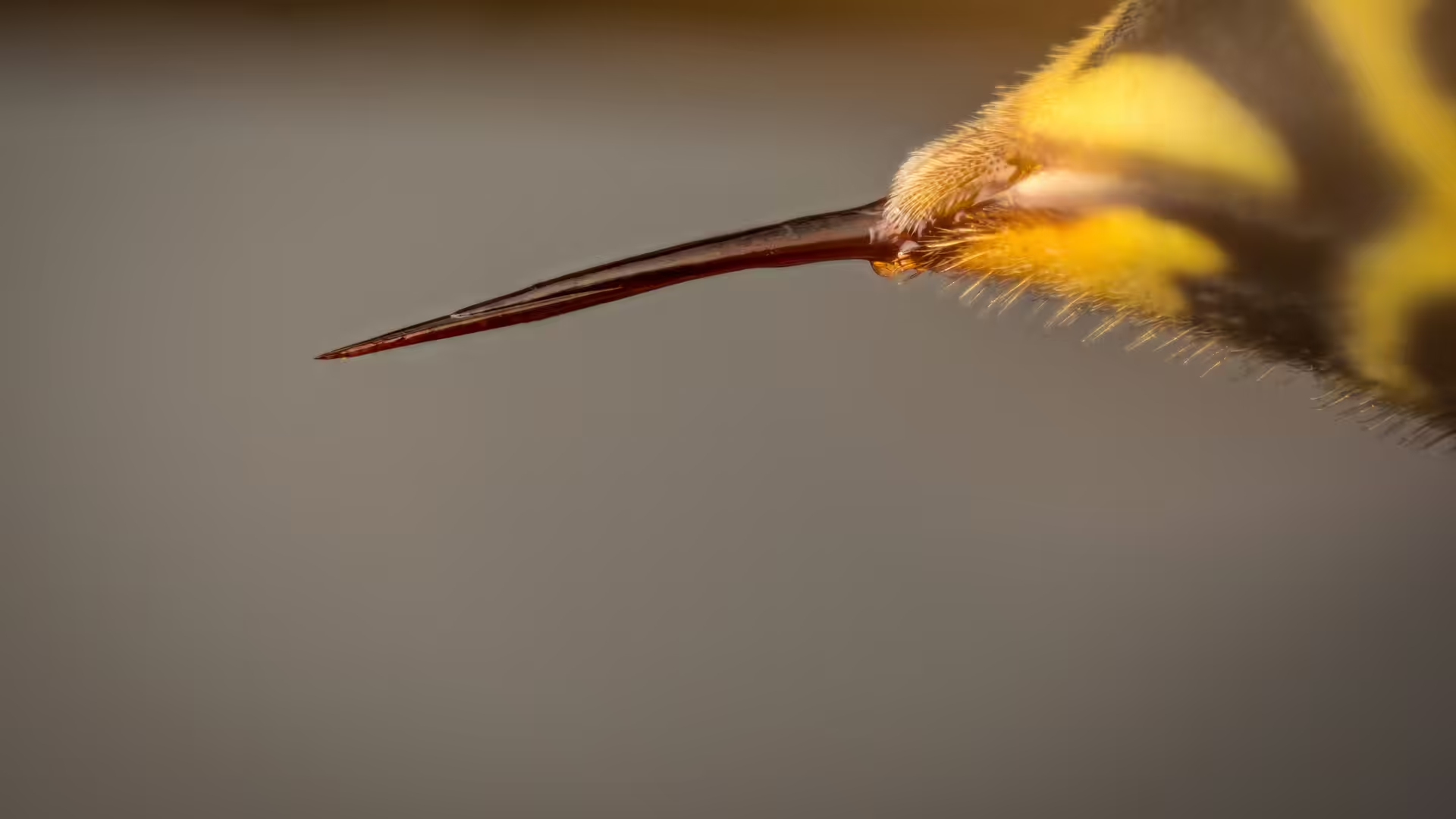
The difference comes down to stinger anatomy, not sacrifice. Unlike honeybees, worker yellow jackets have smooth stingers that don’t barb into skin. They pull away cleanly and can sting again. Nothing about the act of stinging kills them.
Their lifespan is short regardless, and by late summer, many are near the end, whether they’ve stung anything or not. The dying-after-stinging assumption comes from honeybees and doesn’t apply here.
Queens are a different story, and not just because they live longer. A queen’s stinger is smooth and fully retractable, the same basic design as a worker’s, but she’s the only colony member that survives winter.
She rarely stings and spends most of her life deep in the nest. Disturb the colony directly, and she isn’t going to die defending it. She survives, and if the colony isn’t fully eliminated, she rebuilds.
That’s the part most DIY treatments miss. Spraying the outside of a nest may kill workers at the entrance, but if the queen survives, you’re back to the same problem in a few weeks. Our stinging insect control treatments are designed to reach the nest’s interior and take out the colony at the source.
What Happens After a Yellow Jacket Stings You?
Pain, redness, and localized swelling are the normal responses. For most people, it peaks within a few hours and fades over a day or two. So, it’s uncomfortable, not dangerous. Cold pack, antihistamine if it itches, and you’re fine.
The bigger concern is multiple stings. A disturbed colony can deliver dozens in seconds, and the alarm pheromone workers release when they sting draws more in fast. If you’ve stepped near a ground nest, move away from the area quickly. Don’t swat, as that makes it worse.
For a fuller picture of the risks by nest type and location, our guide on are yellow jackets dangerous is worth a look.
Sting Symptoms That Need Medical Attention
Most reactions stay local and resolve on their own. These don’t, so get medical help immediately if you notice any of the following:
- Hives or swelling spreading well past the sting site
- Chest tightness or difficulty breathing
- Sudden dizziness, nausea, or faintness
- Any swelling of the lips, tongue, or throat
These are signs of anaphylaxis. It can become life-threatening fast without treatment. Worth knowing: people who’ve been stung before without a reaction can still develop an allergy with a later sting. If anyone in your household carries an epinephrine auto-injector, keep it accessible during outdoor activity this time of year.
When Should You Call a Professional?
One yellow jacket in the yard isn’t a problem. They’re useful predators and low numbers in open areas aren’t a threat. A nest near a door, a play area, or anywhere people move through regularly, that’s a different situation.
Yellow jackets build in spots that create unavoidable contact: underground near walkways, inside wall voids, in eaves, under deck boards. The nest you find in late July has been growing since spring and likely holds thousands of workers at this point.
Unlike when getting rid of wasps with a hardware store spray, professional removal addresses the entire colony rather than just the workers visible at the entrance.
Signs It’s Time to Remove the Nest
If you’re not sure whether your situation warrants a call, watch for these:
- Heavy, consistent traffic in and out of one specific spot on your structure or yard
- A visible paper nest tucked into an eave, shrub, or under a surface
- Yellow jackets showing up inside through a wall or ceiling gap; that’s a cavity nest
- Any active nest within 10 feet of a door, window, or area where kids or pets spend time
Get Same-Day Wasp Nest Removal in WA
By late July, a mature yellow jacket colony can hold several thousand workers, and their aggression only increases from here. If you’ve spotted a nest or you’re seeing heavy activity around your home, don’t wait for it to resolve on its own. It won’t. Call us at 253-538-2576 for same-day service.
We serve homeowners across: