

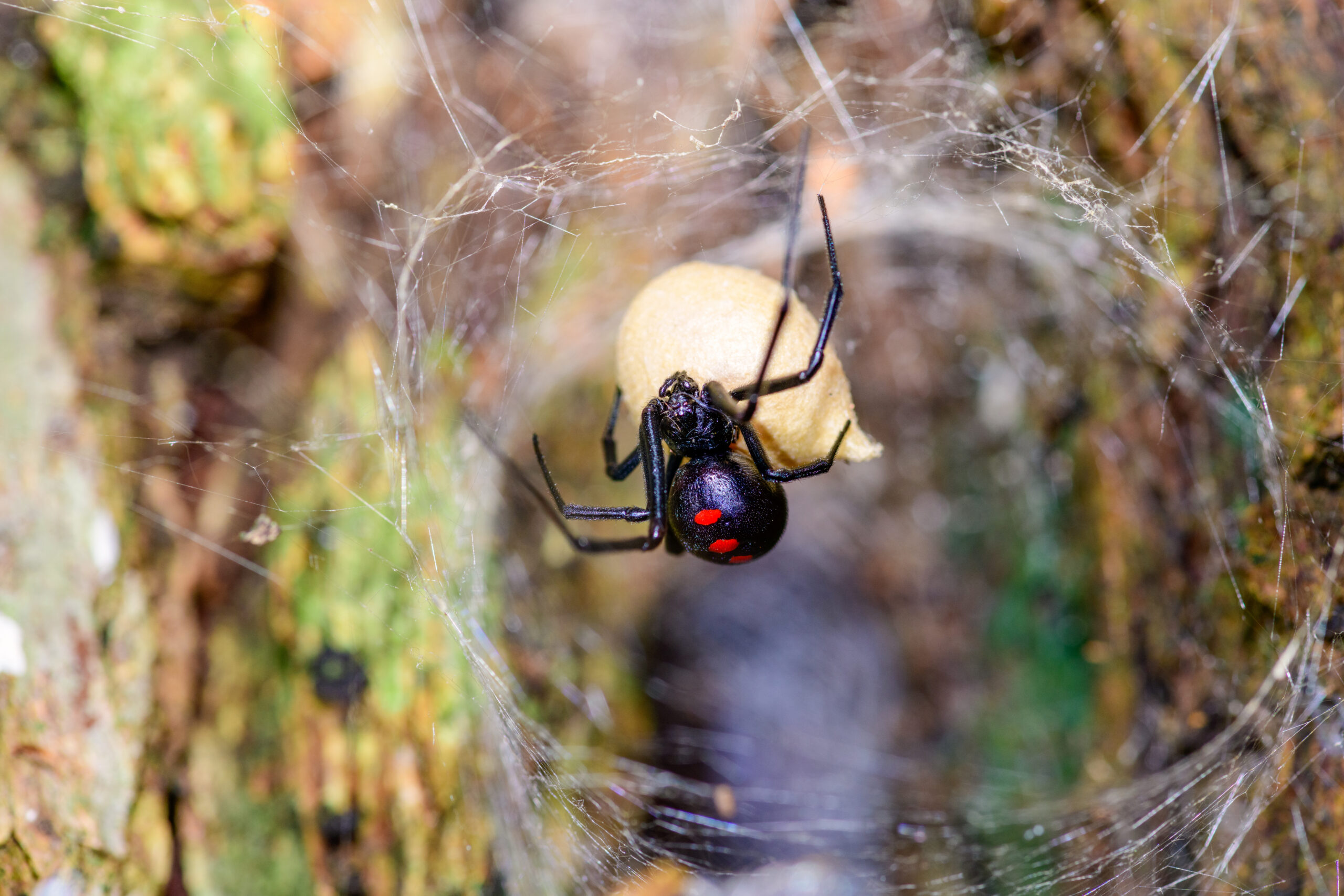
A black widow bite often looks minor: a small red spot around a pinprick, sometimes with two tiny puncture marks. Warning signs can appear within minutes to hours, as pain spreads into the muscles and cramping sets in. If you think a black widow bit you, don't wait for those signs; get medical care right away.
While most spiders around your Washington home are harmless, the black widow is one of the few whose venom can cause serious symptoms. Bites are uncommon because these spiders are shy and only bite when they feel threatened or cornered. When one does happen, it deserves prompt attention.
Black Widow Bite Stages and Symptoms
Plenty of people never see the spider. The pain and what follows are often the first clue.
Stage 1: Right After the Bite
A black widow bite is usually painful right away, like a sharp sting or pinprick. The spot may turn mildly red, and you might see two small puncture marks where the fangs went in. At this point, it can still look like almost nothing.
Stage 2: Minutes to Hours Later
Within minutes to hours, the venom can cause symptoms well beyond the bite site:
- Pain that spreads from the bite into nearby muscles
- Cramps and spasms, mostly in the belly, chest, or back
- Heavy sweating, especially around the bite area
- Nausea, sometimes with vomiting
Fatigue and general weakness can also occur.
Stage 3: Severe Reactions
Some bites cause a stronger reaction. Watch for:
- If breathing gets difficult or your chest feels tight
- A headache that won't go away
- Droopy or swollen eyelids
- Restlessness or anxiety, along with high blood pressure
If you see any of these, don't wait to see whether they pass. Get medical care right away, as you would for the Stage 2 symptoms.
What to Do After a Black Widow Bite
If someone has been bitten, these first steps help while you arrange medical care:
- Stay calm and step away from the spot where the spider was.
- Gently wash the bite with soap and water.
- Hold a cool cloth or a cloth-wrapped ice pack over the bite for 15 minutes each hour.
- If the bite is on an arm or leg, raise it if that's comfortable, and remove tight clothing or jewelry near the bite.
A few things make a bite worse, so skip them:
- Cutting into the wound or trying to suck out the venom
- A tourniquet or anything else that cuts off blood flow
- Heat of any kind on the bite
- Food or drink, if symptoms are severe
When to Get Emergency Care
Any suspected bite needs medical attention. Go to the emergency room right away if any of these happen:
- Pain that intensifies or spreads quickly
- Cramping in the belly or chest, or any trouble breathing
- Severe nausea, vomiting, or sweating
- Symptoms of any kind in a young child, a pregnant woman, an older adult, or anyone with high blood pressure
If you can do so safely, catch the spider in a sealed container or take a clear photo. Whether dead or alive, the spider or a photo helps medical staff confirm it's a black widow and choose the right treatment.
Black Widow Spider Bite Treatment and Recovery
At a medical facility, providers will assess your symptoms and decide on the right level of care. Treatment mainly focuses on managing pain and muscle spasms while your body breaks down the venom. Common treatments include:
- Pain relief medication for the bite site and the affected muscles
- Muscle relaxants to control cramping and spasms
- IV fluids and blood pressure monitoring, with medication when needed
- A medicine that counters the venom (antivenom), reserved for cases where other treatments can't control the symptoms
Hospital stays may be needed for vulnerable people or when symptoms are severe, so staff can monitor breathing and heart function until symptoms pass. Children and older adults are more likely to be kept for observation.
Most people recover within 24 to 48 hours with appropriate medical care, though symptoms can last several days. Serious long-term problems and deaths are both rare today.
Does a Black Widow Bite Damage the Skin?
Not usually. Black widow bites don't typically cause the dying, darkened skin or open wounds linked to brown recluse bites. If the skin around a bite turns dark or breaks open, see a doctor. It could be infected, or a different spider may have bitten you. We also cover brown recluse spiders in Washington.
Black Widow Spiders in Washington State
Female black widows have a glossy, jet-black body with a red hourglass marking on the underside of the abdomen, the large rounded back half of the body. Only adult females have venom that's dangerous to people.
If what you found doesn't match, our spider identification guide can help you narrow it down.
In Washington, black widows are most likely to turn up in the eastern part of the state, where they're common. A few small populations live in western Washington too, so sightings there are less likely but not unheard of.
Activity picks up in spring and summer, and spiders seek shelter when it cools. During our wet winters, that can mean crawl spaces and basements, so check those regularly.
Around the house, black widows favor spots that stay quiet and undisturbed:
- Garages and storage sheds
- Crawl spaces and basements
- Woodpiles and stacked lumber, common in Washington homes that burn wood
- Anything left sitting for a while, such as outdoor furniture, grills, or boxes and gloves in storage
Despite the reputation, black widows are shy. They don't hunt people and will retreat if given the chance. Bites usually happen when the spider gets pressed against skin, like when you slip a hand into a glove where one is hiding or move a box with a web behind it.
Preventing Black Widow Bites in Washington
Start by taking away their hiding spots, beginning with clutter and yard debris:
- Firewood belongs on a rack, away from the outer walls of the house
- Keep garages, sheds, and basements free of undisturbed piles of boxes and old newspapers
- If you can move flower pots and equipment away from the foundation (the base of your house), do it
- Brush, blackberry bushes, and fallen leaves along the foundation give spiders cover, so trim and rake them back
Shake out shoes and gloves before you put them on, especially anything stored in a garage or shed. Wear gloves and long sleeves when you move firewood or clean out storage, and use a flashlight before reaching into dark corners. Spring and summer call for extra care, since black widows are most active then.
Then close off the ways in:
- Seal gaps around windows, doors, and the base of the house with caulk or weatherstripping
- A strip along the bottom of each exterior door and repaired window screens close off the easy openings
- Gaps where pipes and cables come in need sealing too
- Vents and the hatch or door into your attic are common ways in for Washington homes, so check them too
Why Choose Sentinel Pest Control
When black widows turn up, we inspect the whole property. Our spider control services include:
- Property inspections that find current spider activity and the spots where spiders are likely to settle
- Web removal and treatment of the areas where spiders are living
- Sealing entry points so new spiders have a harder time getting in
- Ongoing monitoring through Washington's changing seasons
Knowing exactly which spider you have comes first, because each kind needs a different treatment. From there, we treat the reason spiders are there in the first place and adjust the plan to Washington's seasonal pest patterns.
We prioritize family-safe and environmentally responsible treatments. As a Washington-based company, we protect your family and our state's natural environment, and our technicians are trained to use products and methods that control pests while minimizing impact on your family and pets.
Frequently asked questions
What does a black widow bite look like?
Not much, at first. You may see a small red spot and sometimes two small puncture marks where the fangs went in. The bite is usually painful right away.
How soon do black widow bite symptoms start?
Symptoms can start within minutes to hours. Pain that spreads into the muscles and cramping are common early signs.
Can a black widow bite kill you?
Deaths from black widow bites are rare. Most people recover within 24 to 48 hours with medical care, though symptoms can last several days. Children, older adults, and pregnant women are at higher risk and should get care right away.
What should I do after a black widow bite?
Wash the bite with soap and water, apply a cool cloth or cloth-wrapped ice pack for 15 minutes each hour, and raise the bitten arm or leg if that's comfortable. Then get medical attention; don't wait for symptoms to build.
Are there black widow spiders in Washington?
Yes. Black widows are common in eastern Washington, and a few small populations live in western Washington.
If you've spotted a web in your garage or woodpile, don't wait for a bite to find out whether it's a black widow. Call Sentinel Pest Control at (253) 538-2576 or contact us online and we'll schedule a spider inspection of your Washington property, then build a treatment plan around what we find.
You can see where we work on our service areas page.
Medical Disclaimer: This content is for informational purposes only and does not replace professional medical advice. If you suspect a black widow bite, seek medical attention immediately.