

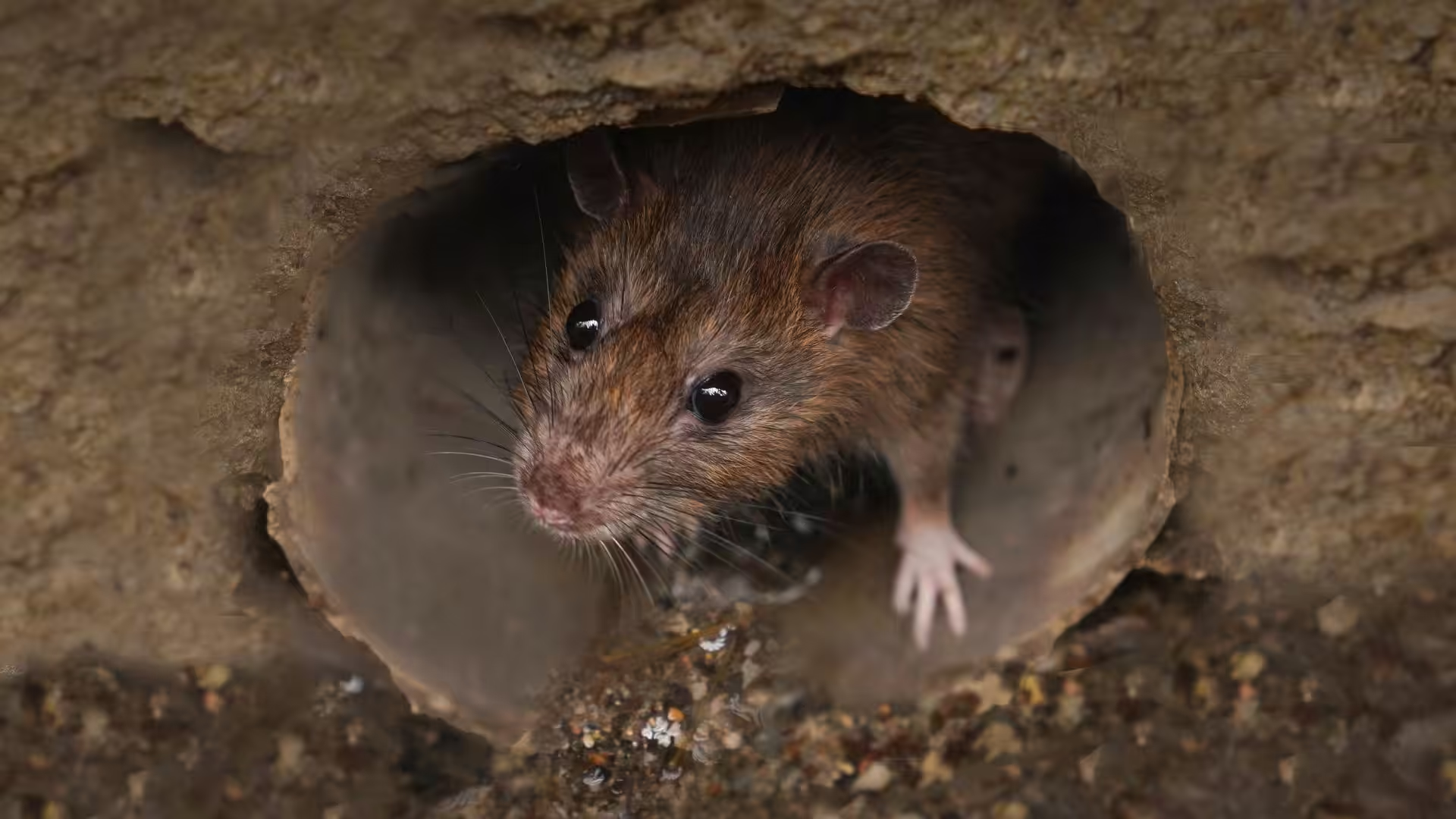
Spotting a small rodent in your home and not knowing what it is puts you at a disadvantage straight away. A mouse and rat difference goes well beyond size. Each species behaves differently, nests differently, and requires a different control approach. Knowing what you’re dealing with is the first step toward getting rid of it for good.
How to Identify Mice vs. Rats
Mice and rats don’t just look different. They leave behind different signs, prefer different spaces, and pose different challenges when they move into your Washington home. Here’s how to tell them apart.
Physical Characteristics and Size
Size is the most obvious starting point. Mice are small, typically 2 to 4 inches long with a tail of similar length. Rats run significantly larger, 7 to 10 inches, with thicker, heavier bodies. Among the different types of rodents you might encounter indoors, rats consistently rank as the largest rodent of the two.
Beyond size, focus on the head and tail. Mice have large ears proportional to their head, a pointed snout, and a thin, hairy tail. Rats have smaller ears relative to their body, a blunter snout, and a thick, scaly tail.
Tail differences between the two are one of the most reliable ways to make a quick ID. A rat’s tail looks almost rope-like compared to the fine, whip-like tail of a mouse. The comparisons get much easier once you know what features to look for.
Behavior and Habitat
Mouse behaviour tends to be bold. Mice are naturally curious and will investigate new objects in their environment within a day or two of arriving. They nest close to food sources, often inside walls, insulation, or cluttered storage areas. If you spot one mouse in the house, others are almost certainly nearby.
Rats operate differently. They’re cautious by nature and will avoid unfamiliar objects for several days before approaching them. Rats prefer to burrow along foundations, under debris, or near water sources. Washington’s Norway rats, in particular, are ground-level nesters and strong diggers. Probably the reason they’re one of the more persistent species in the region.
Vermin activity from both leaves physical evidence behind. Mouse smear marks appear as greasy streaks along walls and baseboards from repeated travel along the same paths. Rats leave similar marks, but wider and darker. Mice bite marks on food packaging, wires, and wood tend to be small and less defined compared to the deeper, cleaner gnaw marks rats produce.
So, are rats and mice the same? Not at all, and their behavior makes that clear.
Lifecycle and Reproduction
Both species reproduce fast, which is why a small problem grows quickly. Mice reach reproductive maturity at around 6 weeks and can produce up to 10 litters per year, averaging 6 to 8 pups each time.
Rats mature slightly slower but still manage multiple litters annually. In a Washington home with consistent shelter and food access, both can build a sizable population within weeks. Getting ahead of the problem early matters, and knowing the steps to getting rid of rats and mice before numbers climb makes a real difference.
Mouse and Rat Droppings Identification
Droppings are often the first signal that rodent management in your home is overdue. Knowing what you’re looking at helps confirm which species you’re dealing with before you take any action.
Mouse droppings are small, about 3 to 6mm, dark, and rod-shaped with pointed ends. You’ll typically find them scattered near nesting areas, along walls, or inside cabinets. If something looks like mouse poop but sits larger and blunter at both ends, you’re likely looking at rat droppings. Rat poop measures roughly 12 to 20mm and is noticeably thicker.
Location tells you something, too. Mice scatter droppings widely as they move around. Rats tend to deposit them in concentrated spots near their feeding areas. Both carry serious health risks, and Washington residents should know that rodent droppings are linked to hantavirus exposure.
Avoid sweeping or vacuuming them dry since that can push contaminated particles into the air. Understanding hantavirus risks in Washington and how to handle affected areas safely is worth reading before you start cleaning up.
Get Pest Control Help from Sentinel Pest Control
A mouse rat difference in behavior means your control approach has to match the species you’re dealing with. Misidentifying what’s in your home leads to wrong trap placement, wrong bait, and missed entry points.
Sentinel Pest Control knows Washington rodents, identifies species accurately, and puts together a plan built around what’s actually inside your walls.
If you’re seeing droppings, smear marks, or gnaw damage and need answers, contact Sentinel Pest Control and get a professional assessment before the situation gets harder to manage.
Frequently Asked Questions
Does a mouse grow into a rat?
No. Mice and rats are entirely different species. A mouse will never develop into a rat regardless of age or size. Both belong to the rodent family but follow completely separate growth paths, lifespans, and behavioral patterns. What you’re looking at when you find one is exactly what it is.
Will rats kill mice?
Yes. Rats are known to kill mice when they share the same space, a behavior called muricide. Rats view mice as competition for food and territory, which is why finding both species active in the same home at the same time is uncommon.
Is it common to have mice in your house?
Very. Mice rank among the most common household pests in Washington, especially during colder months when they push indoors seeking warmth. A gap as small as a quarter inch gives a mouse enough room to enter. Consistent pest control and prevention keep them from settling in before you notice the signs.