

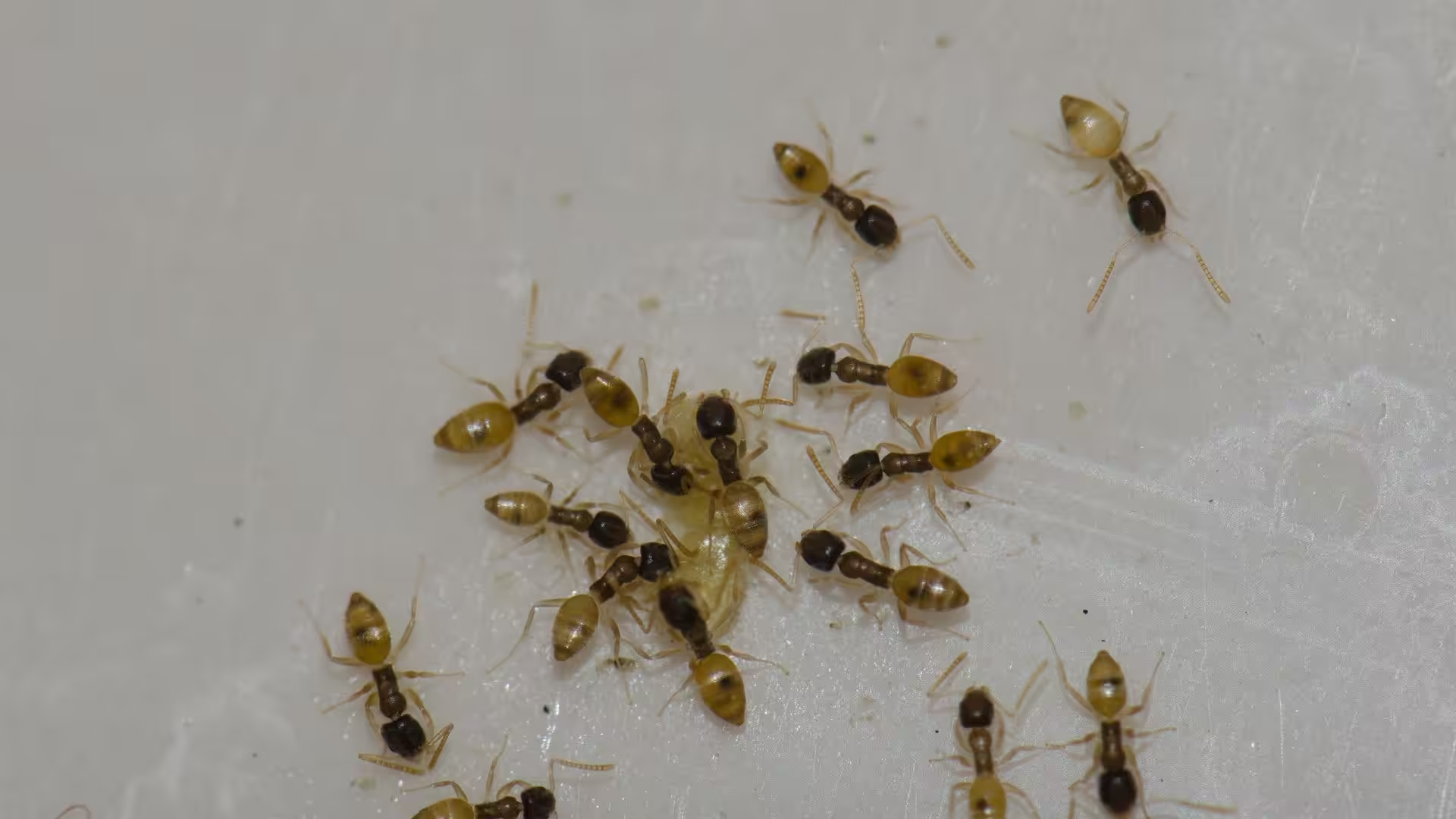
Ants don’t show up in your kitchen by accident. Every ant infestation in your home traces back to a colony already established somewhere nearby. Knowing where ants come from is what separates a real fix from a temporary one.
Where Ants Come From: Outdoor Colonies, Yards and Foundations
Most ant colonies in a house don’t start inside. They start in your yard.
Washington’s wet climate hands several species everything they need to build right against your foundation. Odorous house ants go under stones, mulch, and loose soil. Pavement ants settle into concrete cracks near your perimeter. Carpenter ants are more particular — they need moisture-damaged wood, which this region produces without much effort. Old stumps, decaying logs, and older framing that’s absorbed years of rain all qualify.
Once a colony is that close, foragers start pushing outward. Scouts lay scent trails, and when they find food or water inside your home, workers follow through whatever gap is available.
What Attracts Ants Into Your Home in the First Place
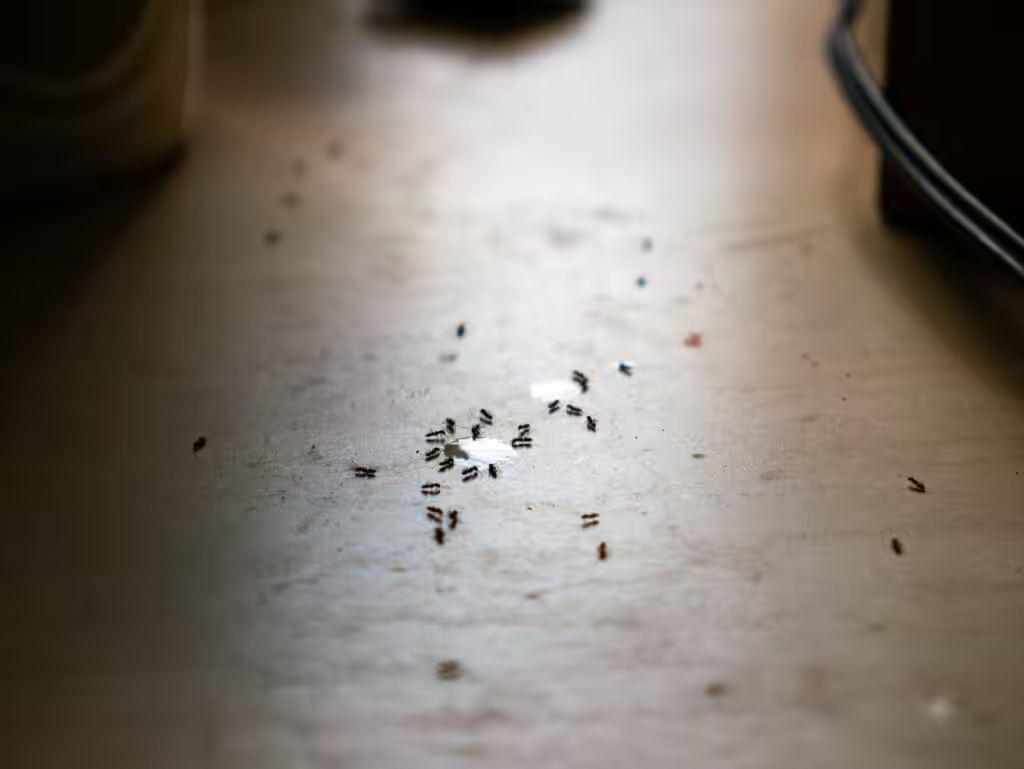
Sugar ants gathering around a droplets of juice
Crumbs on a counter are enough. So is pet food left out overnight, or residue near the trash bin. Ants aren’t picky — they’re efficient. Moisture draws them just as reliably as food does, and Washington’s wet seasons make that pull stronger. When the ground gets saturated outside, ants move toward drier spaces with more stable food access. Your home checks both boxes.
A slow drip under the kitchen sink does more damage than most people realize. Odorous house ants and moisture ants build satellite colonies in exactly those spots — damp, close to plumbing, and near food. Moisture problems inside your home get used the same way. The interior moisture problem and the ant problem usually arrive together.
Where Ants Nest Once They’re Inside Your Walls
Wall voids are better ant habitat than most people think. Warm, close to plumbing, protected from foot traffic — workers can run established routes for weeks without being noticed.
Odorous house ants settle behind baseboards and inside cavities near pipes. Carpenter ants are after something different. They hollow out softened wood to build galleries, and anywhere moisture has already compromised framing or window sills is a target. More on carpenter ants in your home and how they establish themselves.
An ant nest inside your house doesn’t announce itself on day one. Faint rustling at night, frass near a baseboard, small debris piles by a window frame — those signs show up long before a visible trail does. By the time ants are moving in numbers, the nest has typically been active for weeks.
Why Are Ants Suddenly Appearing Out of Nowhere?
If it seems like ants are appearing out of nowhere, there’s almost always a seasonal explanation. Late winter and early spring are when colonies ramp up and foraging kicks back into gear. Heavy spring rains are the other factor — they flood shallow nests. When that happens, ants move toward drier, higher ground. That’s often inside your walls or under your flooring.
Fall brings a second wave. As conditions cool, ants look for insulated spaces to overwinter, and wall voids near heated areas of your home become prime territory.
If you’re wondering why there are so many ants in your house all of a sudden, check whether there’s been a recent weather shift. A stretch of heavy rain or a few warm days following a cold snap will move a colony that’s been sitting quietly outside right to your door.
How to Find Where Ants Are Coming From in Your House
Follow the trail backward, not forward. Watch where foragers are traveling and trace the line toward the entry point rather than just eliminating what’s visible. Ants rarely enter randomly — they use established routes laid down by scouts that came through days or weeks earlier.
In Washington homes, gaps around door frames, foundation sill cracks, and openings where utility pipes enter the wall are the most reliable places to start looking. You can find a full breakdown of common ant entry points and what to look for. Anywhere siding meets a window frame is worth checking too.
Signs of an ant infestation in your house worth watching for:
- Frass or fine debris near wood structures — carpenter ants leave this as they work
- Daily trails running along the same wall or baseboard path
- Scouts showing up in new areas after you’ve treated one spot
- A faint musty odor in enclosed spaces — a byproduct characteristic of odorous house ants
Why Store-Bought Treatments Don’t Solve the Problem
Spraying visible ants kills foragers. It doesn’t touch the colony. Most over-the-counter repellents make things worse by triggering budding, where the colony splits and relocates rather than dies. You end up with two problem areas instead of one.
Baits work differently, but species selection matters. Carpenter ants go for protein-based options. Odorous house ants lean toward sweet baits — except when they don’t, because that preference shifts by season. A product that gets results for a few days can stop attracting them entirely once their nutritional needs change.
Effective ant infestation control means treating the colony, not the trail. Sentinel’s ant management process identifies the species first, then applies targeted interior and exterior treatments designed to reach the source.
That distinction matters because the treatment approach for a carpenter ant colony working through your wall framing looks nothing like what works for odorous house ants nesting behind a baseboard.
Sentinel Pest Control Eliminates Ants at the Colony Level
If ants keep returning no matter what you’ve tried, the colony is still intact. Sentinel Pest Control serves homeowners across Washington with species-specific treatments that reach the nest directly, not just what’s visible on your kitchen floor. Schedule your inspection today and find out exactly where they’re coming from.