

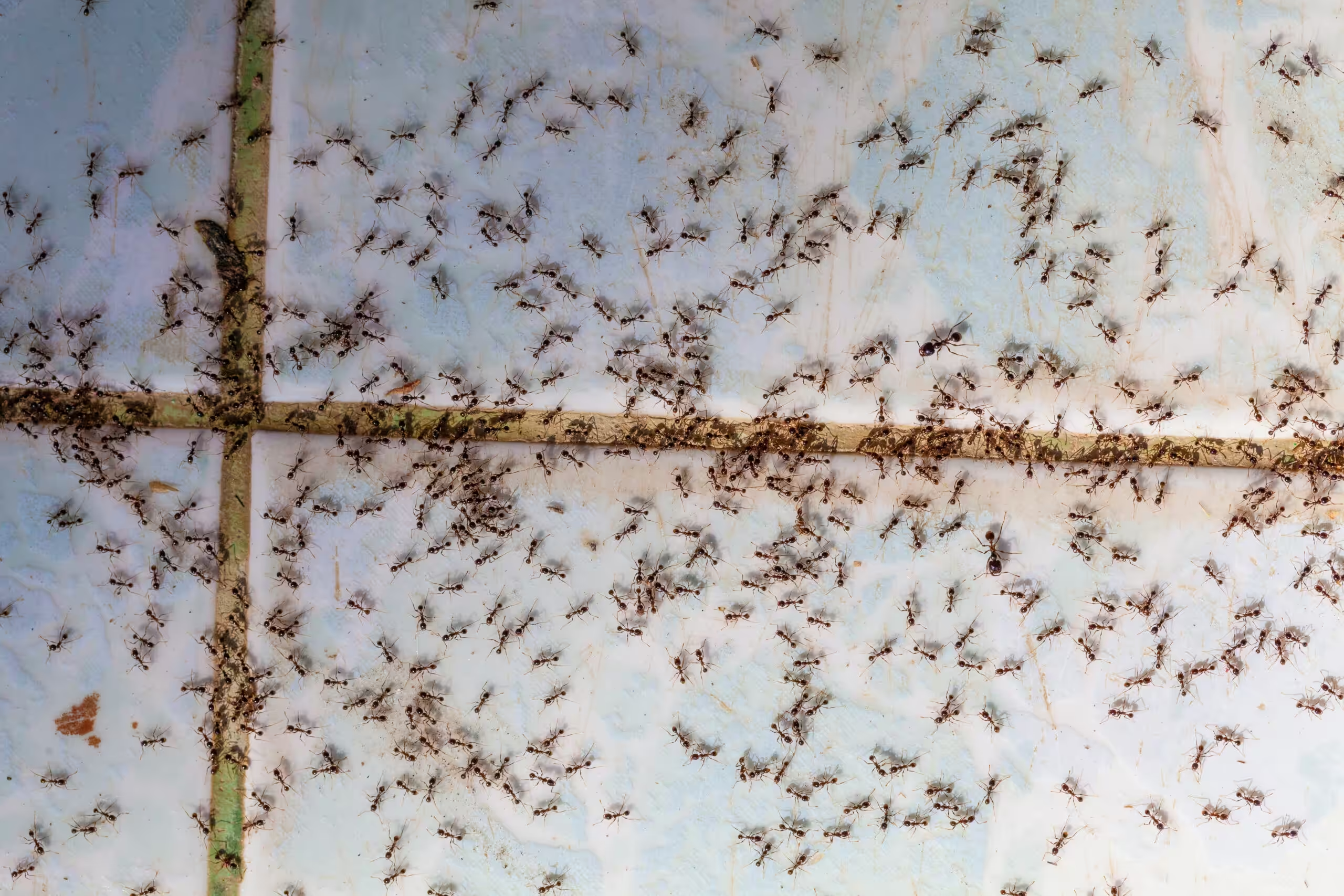
Few household problems feel as irritating as spotting ants inside your home. Often, it starts with just a few ants wandering across a countertop or floor. At first, they seem harmless. However, those ants are usually scouts, sent out to search for food, water, and shelter. Once they find what they need, they quickly signal the rest of the colony.
Small issues can escalate fast. A minor food spill, a change in weather, or a hidden outdoor nest can suddenly turn into a steady stream of ants indoors. Because ants are highly organized and persistent, they rarely give up once they establish a route.
Understanding how ants get inside is the first step toward stopping them. This article explains the most common entry points, what attracts ants to homes, and why infestations often return without proper control. Homeowners in Washington can use this information to reduce ant activity and protect their living spaces.
1. Cracks in Walls and Foundations
Ants can enter through openings so small they are easy to overlook. Tiny cracks in walls and foundations provide convenient access points, especially for ants nesting outdoors.
Natural settling, aging siding, and deteriorating mortar all contribute to these gaps. Over time, weather and moisture make them worse. Many ant species build nests in soil near foundations and use these cracks as direct routes inside.
Signs of this type of entry may include small piles of dirt or sand near baseboards, basement corners, or along foundation walls.
Common entry points to note include:
- Foundation and wall cracks
- Gaps around doors and windows
- Openings around utility lines and vents
- Gaps near exterior fixtures, such as hose connections
Sealing gaps with appropriate caulking helps block entry and also improves energy efficiency. While sealing alone may not eliminate an existing infestation, it plays an important role in prevention.
2. Windows as Entry Points (Open and Closed)
Windows are another frequent access point for ants. Open windows without proper screens allow direct entry, especially during warmer months. Even closed windows, however, can still be vulnerable.
Many windows include small drainage or moisture-release openings. When caulking fails or wood becomes damaged, ants take advantage of these weaknesses. Moisture damage can soften frames, creating ideal conditions for certain ant species that prefer damp or decaying wood.
Some ants even nest inside window frames when conditions allow. Because of this, window maintenance is essential for long-term control.
Prevention tips include:
- Inspecting windows, frames, and screens regularly
- Replacing worn weather stripping
- Repairing moisture damage and rotted wood promptly
Addressing these issues early reduces the risk of ants using windows as entry points.
3. Ants Entering in Search of Food
Food is one of the strongest motivators for ants. They are relentless foragers and communicate efficiently. Once a food source is discovered, ants recruit others within minutes.
Common indoor attractants include pet food, unsealed trash, pantry spills, crumbs, and sugary foods or drinks. Even small residues can sustain an ant trail.
Many homeowners turn to DIY ant traps or baits. While these products can help in some situations, they have limitations. Some target only certain species or life stages. Others fail to reach the queen, allowing the colony to survive. In addition, ants may avoid ineffective baits over time.
Because colonies can reproduce faster than some treatments work, food-related infestations often persist without professional intervention.
4. Ants Seeking Shelter From Weather
Weather changes play a major role in ant behavior. Heavy rain can flood outdoor nests, forcing ants to relocate quickly. When this happens, nearby homes become attractive shelters.
Hot or dry conditions also drive ants indoors. During droughts or extreme heat, ants search for reliable water sources. Homes provide exactly what they need.
Indoors, ants find stable temperatures and easy access to moisture. Kitchens, bathrooms, laundry rooms, and crawlspaces are especially appealing. As a result, ant activity often increases during seasonal weather shifts.
5. Scent Trails Leading Ants Indoors
Ants rely on pheromone trails to communicate. When a scout ant finds food or water, it leaves a scent trail behind. Other ants follow that trail precisely, which is why infestations often appear as straight lines of ants.
Killing visible ants does not remove these trails. Without proper cleaning, new ants continue to follow the same path.
A key disruption method involves cleaning affected areas with soap and water or vinegar. This helps remove pheromone residue and temporarily disrupts trails. However, if the source of the infestation remains, ants often rebuild their paths.
6. Indoor Nesting and Colony Expansion
Some ant species do more than forage indoors. They establish nests inside walls, ceilings, or other structural voids. Moisture problems, such as leaks or condensation, create ideal nesting conditions.
Certain ants excavate wood to create galleries. Although they do not eat wood, the damage can still be concerning. These nests remain hidden, allowing colonies to grow unnoticed.
DIY treatments can make this situation worse. Repellent sprays may cause colonies to split, a process known as budding. When budding occurs, ants spread into new areas, creating multiple colonies instead of one.
Proper identification and targeted treatment are critical. Without them, infestations often expand rather than resolve.
7. Ants Following Other Pests
Ants sometimes enter homes because of other pests. Many ants feed on honeydew, a sugary substance produced by insects like aphids, whiteflies, and scale insects.
Ants may be introduced through infested houseplants. Once inside, they begin foraging beyond the plants, exploring kitchens and living areas. Over time, this behavior leads to broader infestations.
Managing plant pests and inspecting new plants before bringing them indoors can help reduce this risk. However, once ants establish trails, additional control measures are usually needed.
8. The Importance of Outdoor Ant Prevention
Stopping ants indoors often starts outside. Preventive measures around the exterior of a home reduce the chances of ants ever getting inside.
Outdoor control focuses on prevention rather than reaction. Managing vegetation by trimming branches and shrubs away from the structure removes natural bridges. Mulch control helps reduce moisture near foundations, making the area less attractive to nesting ants.
Perimeter treatments using non-repellent solutions can be especially effective. These products allow ants to carry treatments back to the colony, addressing the problem at its source rather than just the symptoms.
Professional Ant Control from Sentinel Pest Control
Persistent ant problems should not be ignored. Sentinel Pest Control provides professional ant control services throughout Washington, focusing on long-term solutions rather than temporary fixes.
Comprehensive inspections identify ant species, entry points, and nest locations. Customized treatment plans address the root causes of infestations, offering greater effectiveness than DIY methods.
Services include:
- Ant identification and species-specific treatment
- Interior and exterior ant control
- Perimeter protection and exclusion recommendations
- Moisture and entry-point assessments
Service Areas:
- Seattle, WA
- Tacoma, WA
- Bellevue, WA
- Kent, WA
- Everett, WA
- Renton, WA
- Federal Way, WA
- Auburn, WA
- Lakewood, WA
- Olympia, WA
If ants keep returning despite your efforts, Sentinel Pest Control can help. Contact their team today to schedule an inspection or request a quote and take control of ant activity in your home.