

Finding bugs in your bed is alarming, but before you act, you need to confirm what you’re dealing with. A bed bug infestation looks different from other pest problems, and misidentifying it wastes time and money. Here’s how to know for certain what’s sharing your Washington home.
Bed Bug Life Cycle and Reproduction
Bed bugs move through five bed bug life stages before reaching adulthood. Each stage requires a blood meal to progress to the next, and at room temperature, a bed bug develops from egg to adult in roughly five weeks.
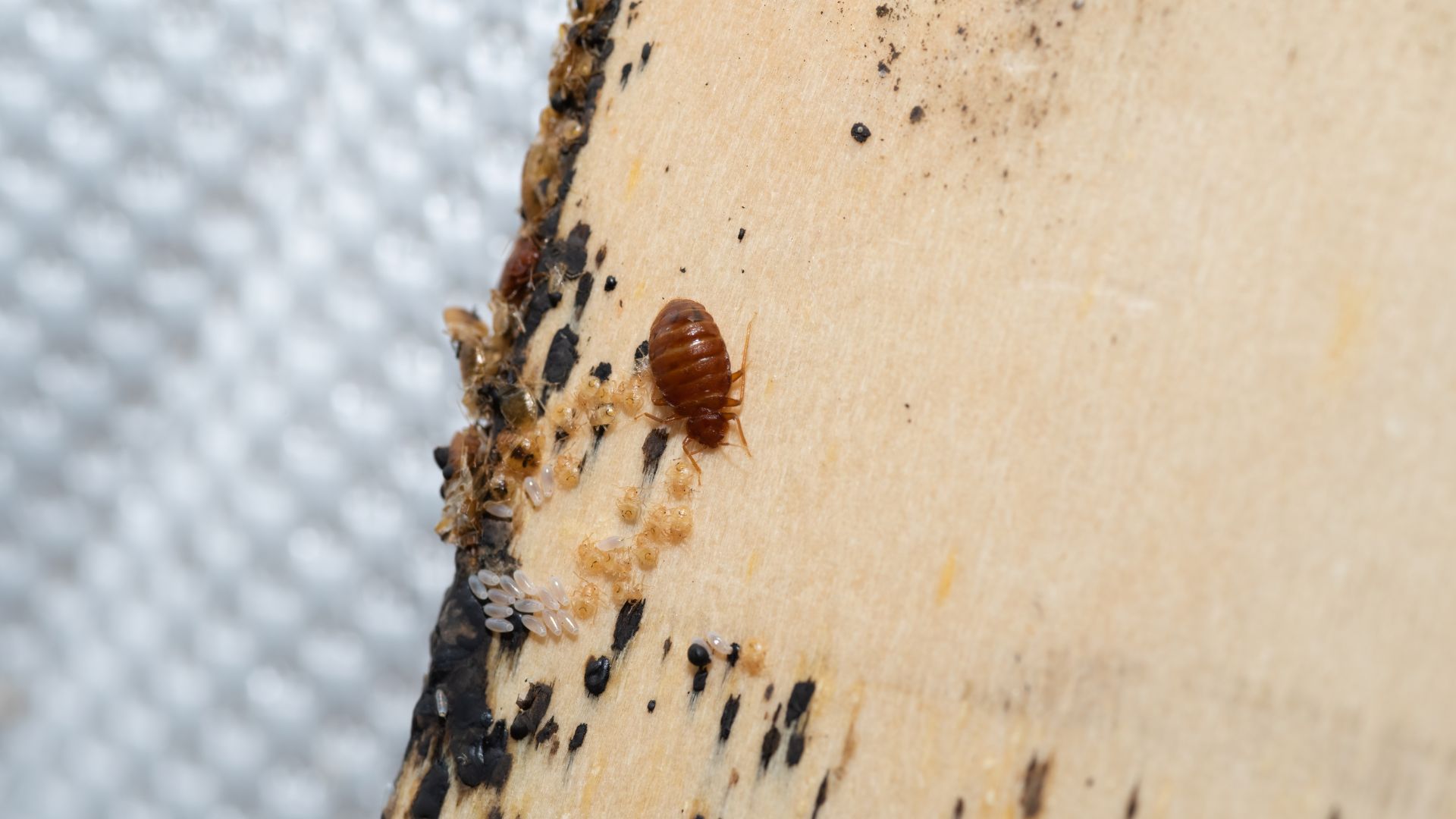
Females lay one to five bed bug eggs daily, depositing them in cracks, seams, and hidden surfaces close to where you sleep. Those eggs are tiny, white, and about the size of a pinhead. Once hatched, nymphs are nearly translucent and difficult to spot without a close inspection. By the time you notice adults, a colony has often been building for weeks.
Adult bed bugs are flat, oval, and reddish-brown, about the size of an apple seed. You may wonder if you can see bed bugs with the naked eye. Adults, yes. Nymphs and eggs are far easier to miss.
Bed Bug Infestation Signs
Catching a bed bug infestation early comes down to knowing what to look for beyond the insects themselves. You’ll often find evidence before you find a single live bug.
Bed bug stains on your mattress or bedding are one of the first indicators. These appear as small rust-colored or dark spots from crushed bugs or their droppings. You may also find bed bug casings, the shed exoskeletons nymphs leave behind as they grow. These hollow, translucent shells collect along mattress seams and baseboards.
Don’t stop at the bed. Check for bed bugs in your couch and any upholstered furniture where people sleep or rest regularly. Pull back the cushions and inspect the seams, frame, and corners underneath. Knowing how to spot bed bug dirt on your sheets and surfaces makes it easier to spot activity you might otherwise overlook.
How to Check for Bed Bugs
Start with your mattress. Strip all bedding and use a flashlight to inspect every seam, corner, and tag. A flat card helps you get into tight folds where bugs and eggs tend to cluster.
Move to your bed frame and headboard next. Bed bugs favor wood over metal and tend to gather in joints and cracks. From there, check nightstands, baseboards, electrical outlets, and any upholstered furniture nearby.
Signs of bed bugs on sheets include blood smears from crushed bugs during sleep and dark fecal spots along the edges. If your sheets show either of these consistently, dig deeper.
Some insects get mistaken for bed bugs. If you’re unsure whether what you’ve found is actually what you think it is, learning about what a bed bug looks like can help you rule out other pests before taking action.
Likewise, knowing when bed bugs are most active helps you time inspections to catch activity you’d otherwise sleep through.
Bed Bug Symptoms and Bites
Not everyone reacts to bedbug bites the same way. Some people wake with visible welts while others show no reaction at all, which makes bites alone an unreliable way to confirm an infestation.
When reactions do appear, bed bug bite symptoms typically include small, red, itchy welts in a line or cluster. A bed bug skin rash can develop in people with sensitivities, and in rare cases, bites may appear on the scalp if contact happens during sleep. If you’re unsure what bit you, identifying bug bites by appearance can point you in the right direction.
However, bed bugs’ health risks go beyond skin irritation. Secondary infections from scratching are common, and prolonged infestations affect sleep quality significantly. They don’t transmit disease, but the physical and psychological toll of an untreated problem adds up fast.
Bed Bug Treatment and Prevention (DIY)
If you’ve confirmed the infestation is small and contained, these steps help slow it down while you arrange a professional treatment.
Bed bug prevention tips and immediate actions to take:
- Wash all bedding and clothing in hot water, then dry on high heat for at least 30 minutes
- Vacuum your mattress, bed frame, and floor thoroughly, then seal and dispose of the vacuum bag right away
- Encase your mattress and box spring in bed bug-proof covers
- Cut down clutter around sleeping areas to remove hiding spots
- Inspect secondhand furniture carefully before bringing it inside
When traveling, bed bug precautions include checking hotel mattress seams before unpacking, keeping luggage off the floor, and inspecting your bags before you head home.
Among control measures of bed bugs, heat is the most reliable option for treating individual items. To avoid bed bugs long-term, routine inspections matter more than any single treatment. Catching activity early is what keeps a manageable problem from spreading to every room.
Professional Bed Bug Extermination with Sentinel Pest Control
DIY steps manage a contained problem but rarely eliminate a full infestation. Bed bugs hide in wall voids, electrical outlets, and deep inside furniture that home treatments can’t consistently reach. Knowing when to call a professional for bed bugs is just as important as knowing how to inspect for them.
Sentinel Pest Control offers professional bed bug control for Washington homes and businesses. From targeted heat treatments to pest control services for bed bugs that address the full scope of an infestation, every treatment is built around getting it right the first time, not just reducing the surface population.
If you’ve confirmed activity or want a professional inspection before it spreads further, contact Sentinel Pest Control and get ahead of it now.