

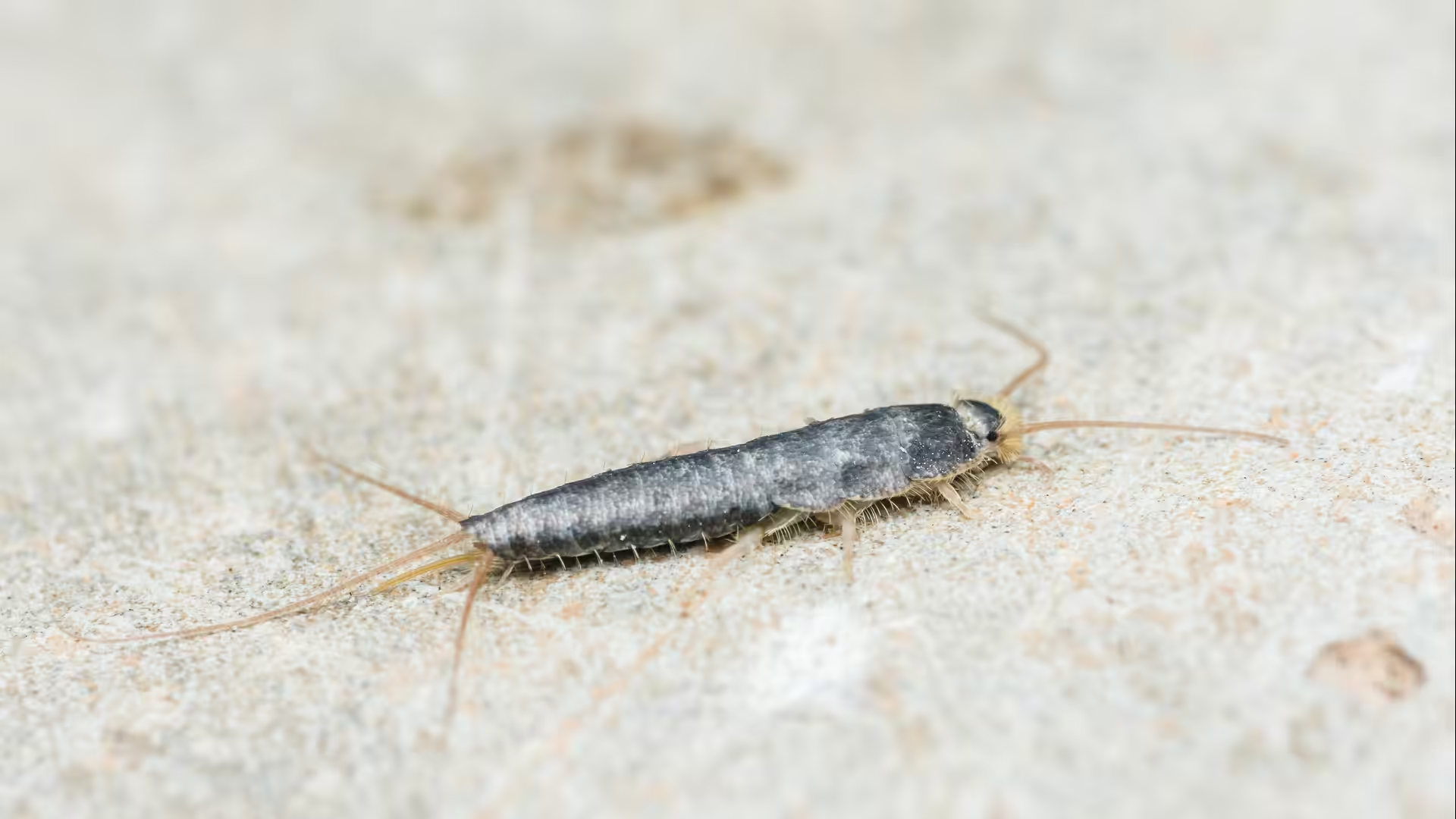
You flip on the bathroom light at midnight and something silver darts under the baseboard, wriggling like a tiny fish out of water. That’s a silverfish, and if you’ve seen one, there are almost certainly more.
Silverfish control for Washington homes starts with a hard truth: these insects don’t show up because a house is dirty. They show up because it’s damp, and damp is something most homes west of the Cascades have in spades.
We get calls about silverfish year-round, not in seasonal waves like ants or wasps. They live deep inside walls and crawl spaces, quietly feeding on the contents of boxes you forgot you owned. By the time one sprints across the bathroom floor, a population has been building out of sight for months.
Why Do Silverfish Invade Damp Homes?
Moisture is the whole story. Silverfish need high humidity to survive, and they’ll seek out the most humid corners of a house and settle in. A leaky pipe or a poorly ventilated bathroom is plenty. A crawl space with a failing vapor barrier is even better, and our climate handles the rest.
At a quarter-inch long and silvery-gray, a silverfish is hard to mistake once you get a look at one. The body tapers like a carrot, and three bristly tails trail off the back end. They breed slowly compared to most household pests, so an infestation creeps up over a year or two rather than exploding overnight.
By the time the first one shows itself, plenty more are already living behind the walls.
Humidity, Paper, and Starchy Foods
What silverfish eat surprises most people. They’re after starches and sugars, and that covers far more than the pantry. Their menu runs to things you’d never think of as food:
Paper, book bindings, and the glue in box flaps
Wallpaper paste and the backing behind it
Flour, cereal, and other dry pantry goods
Dead skin cells, dust, and even other silverfish
That appetite for paper and glue is why people find them in stacks of old magazines and long-stored cardboard boxes.
A damaged crawl space makes things worse on both fronts, since the moisture that draws silverfish invites a longer list of pests, too. If your home has dampness underneath, it’s worth understanding how crawl space moisture rolls out the welcome mat.
Where Do Silverfish Hide Indoors?
Silverfish are nocturnal and shy, so you rarely see the colony. You see the occasional scout. They wedge into tight, humid, dark spaces during the day and come out at night to feed, and finding those hiding spots is half the battle.
Bathrooms, Basements, and Bookshelves
The pattern holds up across the homes we treat. Silverfish gather wherever moisture collects and clutter gives them cover. A few spots are worth checking first:
Under bathroom and kitchen sinks, near the plumbing
Basements, laundry rooms, and unfinished storage areas
Bookshelves, paper piles, and long-stored boxes
Attic insulation and the gaps behind baseboards
You don’t always need to spot a live one to know they’re around. Look for tiny holes chewed in paper or fabric and faint yellow stains on stored items. You might also find what looks like fine black pepper. That’s their droppings, and shed skins collect in the same corners. Damage to books and boxes is often how people realize the problem isn’t new.
Old homes give them more room to hide than new construction, and the Pacific Northwest has plenty of older housing with the damp basements silverfish love. If you want to see how they fit the bigger picture, our rundown of common Pacific Northwest pests puts them in context.
How Do I Get Rid of Silverfish?
Here’s the part that trips people up. You can squash every silverfish you see and still have an infestation, because the ones you see are a fraction of the total. Knowing how to get rid of silverfish means going after the conditions that keep them alive, not the individuals.
Store-bought silverfish control products knock down a few, but they rarely reach the humid pockets where the population lives.
Lowering Humidity and Sealing Cracks
Controlling silverfish is mostly about drying the place out and closing the gaps they slip through. The bugs can’t thrive without moisture, so that’s where the real work is. A few changes do the heavy lifting:
A dehumidifier in the basement and damp rooms does a lot of the work
Fix leaky pipes and improve bathroom ventilation
Seal cracks around baseboards and pipe penetrations
Store dry food and important papers in sealed containers
Drying out a crawl space often means dealing with the vapor barrier underneath, and a failing one is a common culprit in damp PNW homes. Sealing entry points matters as much. It’s the same logic behind any solid pest-proofing plan. Do both and you take away the two things silverfish depend on.
When silverfish keep coming back despite a drier house, the cause is usually a moisture source you can’t see or reach, like a damp wall void or a crawl space that never dries out.
That’s where we come in. We track down the humid pockets feeding the population and treat the harborage points directly, instead of spraying baseboards and hoping for the best. One visit gets the active numbers down, and we’ll flag the moisture fixes that keep them from rebuilding.
Sentinel Silverfish Control
Silverfish are stubborn because the moisture that feeds them is built into so many homes here. If you’re finding them in the bathroom or spotting chew marks on books and stored boxes, we can identify the source rather than chase stragglers.
The late-night sightings get old fast, and squashing scouts never ends it. Call us at 253-538-2576 for a free estimate. You can also get in touch through our contact page and we’ll take a look.
We provide silverfish pest control and full home pest management across our service areas in Western Washington.