

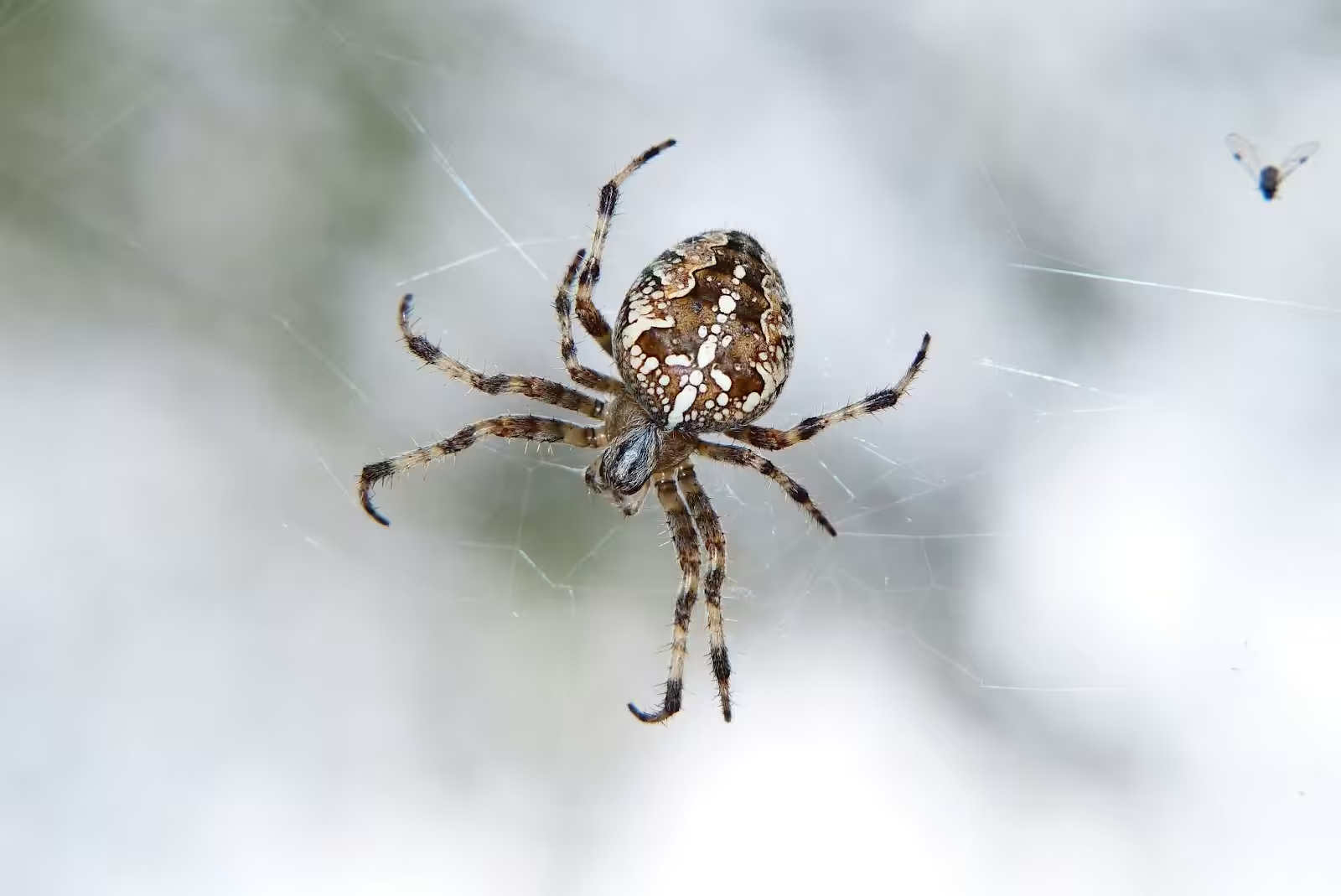
That spider in your Bremerton bathroom corner might know more about your morning schedule than you think. While you grab your coffee and rush out to catch the Kitsap Transit ferry to Seattle, that eight-legged roommate has been taking notes.
Recent research shows that spiders can detect vibrations from human footsteps up to 10 feet away, potentially allowing them to recognize patterns in household activity. As Pacific Northwest temperatures drop this fall, more spiders are seeking warm indoor spaces around neighborhoods like Manette and West Hills, and they’re surprisingly good at adapting to human routines.
But do spiders learn your daily routine in the same way your dog knows when it’s dinner time? The answer involves some pretty fascinating science about spider intelligence, sensory abilities, and behavioral adaptation that might change how you view these common household guests.
Do Spiders Learn Your Daily Routine or Recognize You?
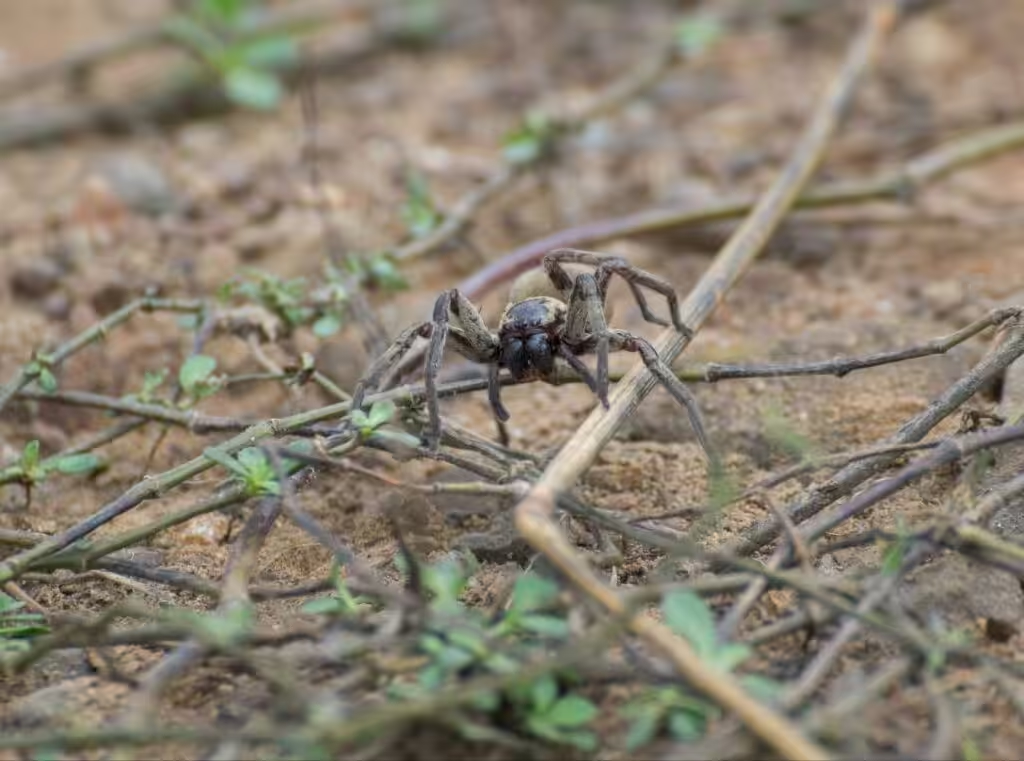
Spiders don’t “learn” in the traditional sense like mammals do. They lack the complex brain structures needed for memory formation and pattern recognition. However, do spiders learn your daily routine through environmental cues? They absolutely do.
These creatures operate on instinct and environmental responses rather than conscious learning. When you walk across your hardwood floors every morning at 7 AM, spiders feel those vibrations through their incredibly sensitive legs. They can distinguish between different types of movement, whether that’s your heavy work boots versus your partner’s slippers, or the family cat padding across the kitchen.
What makes this particularly relevant for Bremerton residents is our region’s seasonal spider activity. During the autumn months, house spiders and giant house spiders become more active indoors, seeking warmth as temperatures around Puget Sound start dropping. These spiders quickly adapt to household rhythms, becoming less active during peak human activity times and more active during quiet periods.
How Spiders Use Senses and Patterns to Navigate Their Environment
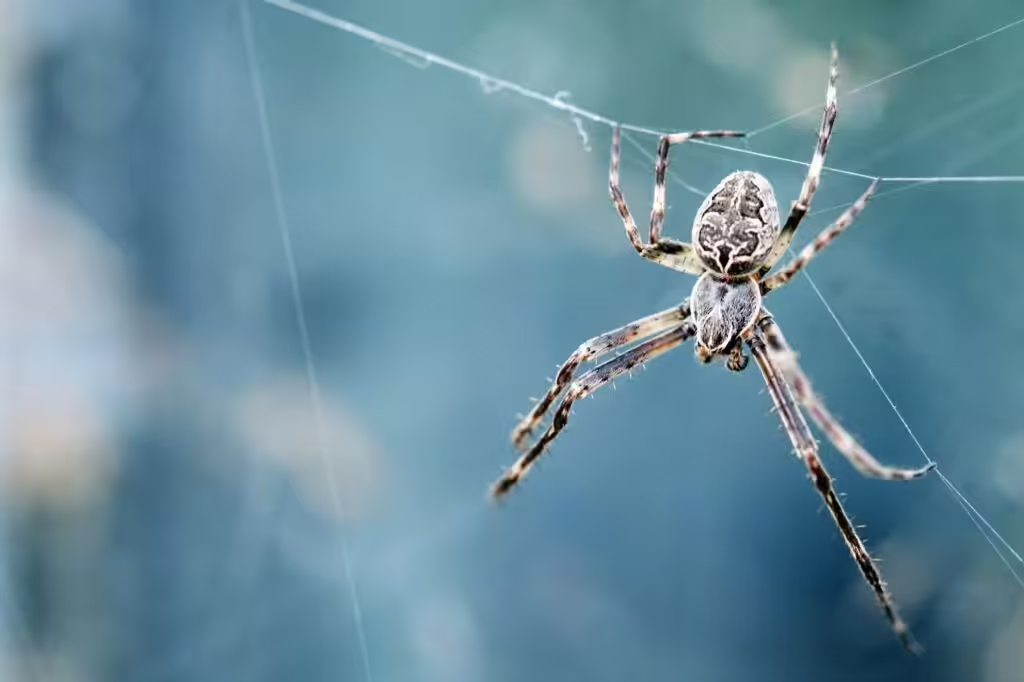
Spiders are sensory superstars, equipped with abilities that would make any home security system jealous. Their legs contain specialized organs called slit sensilla that detect minute vibrations, air currents, and even chemical signatures.
This sensory network helps them respond to environmental patterns, including human activity schedules.
Consider how spiders learn your daily routine through these remarkable senses:
- Vibration Detection: Your morning shower creates specific water pipe vibrations that spiders associate with increased human activity
- Air Current Recognition: Opening doors and windows creates air movement patterns that spiders can sense and respond to
- Chemical Cues: Human pheromones and household cleaning products create scent patterns that influence spider behavior
Believe it or not, spiders can adjust their web-building activities based on environmental rhythms and noise. Many species build or repair webs during low-activity periods, typically late evening or early morning, when vibrations are minimal.
Myths vs. Facts About Spiders Adapting to Human Habits
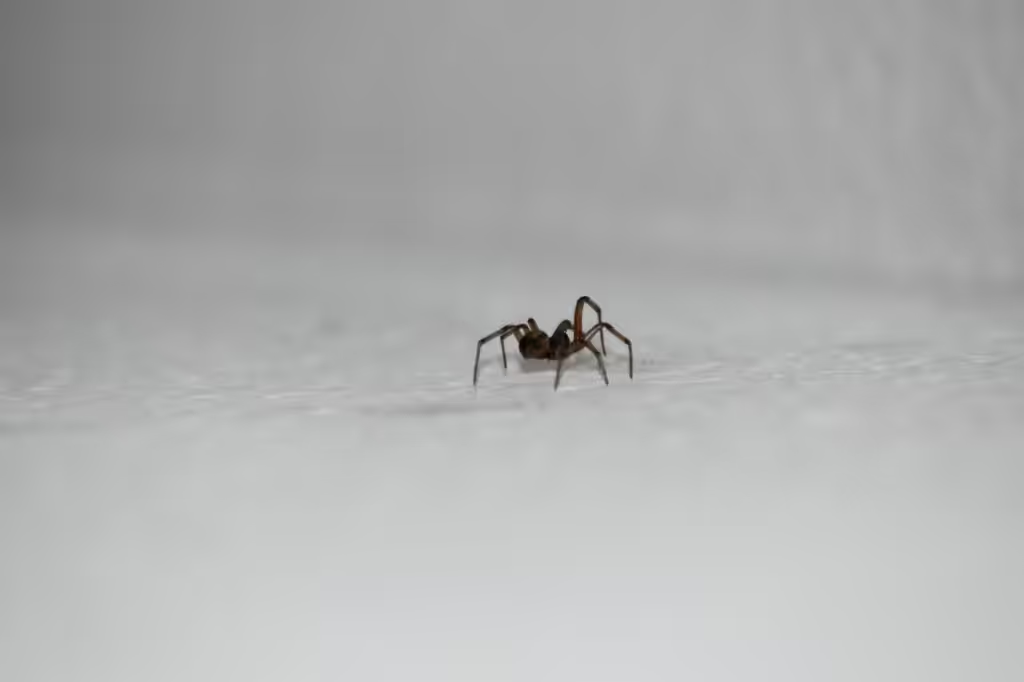
Let’s clear up some common misconceptions about spider behavior that circulate among homeowners in the greater Bremerton area.
Myth: Spiders deliberately avoid humans by learning our schedules.
Fact: Spiders respond to vibrations and disturbances instinctively. They’re not plotting your avoidance – they’re simply following evolutionary programming to stay safe.
Myth: The same spider keeps appearing in the same spot because it recognizes you.
Fact: Spiders return to specific locations because of environmental factors like humidity, temperature, and prey availability. Your bathroom corner isn’t chosen personally. It just happens to be the perfect spider real estate.
Myth: Spiders become more aggressive if disturbed during “their time.”
Fact: Most house spiders are non-aggressive and prefer fleeing over fighting. When spiders learn your daily routine patterns are disrupted, they typically hide rather than become defensive.
The truth about spider adaptation is more about survival instincts than intelligence. Bremerton’s common house spiders, including the large Eratigena atrica (giant house spider), have evolved to coexist with human activity by responding to environmental cues rather than actively studying human behavior.
When to Call Pest Control for Persistent Spider Activity in Bremerton
While most spiders are harmless and even beneficial (they eat other pests), certain situations warrant professional intervention. If you notice unusual spider activity around your Olympic Peninsula home, especially increased numbers during typical inactive seasons, it might indicate a larger pest problem attracting them.
At Sentinel Pest Control, we recommend professional assessment when spider populations seem abnormally high or when you encounter species you cannot identify. Our local expertise helps distinguish between normal seasonal activity and problematic infestations throughout Kitsap County neighborhoods.
Professional pest management becomes even more essential when spiders interfere with your daily routines or when family members have spider-related anxieties affecting their quality of life. We provide comprehensive inspections and treatment plans tailored to Bremerton’s unique climate and spider species.
Ready to reclaim your space from uninvited eight-legged guests? Contact Sentinel Pest Control today for expert spider control services throughout the Bremerton area.
Did You Know?
Some spiders, like the brown recluse, can survive as long as 12 months without food, which explains why that spider in your garage seems to appear and disappear mysteriously. Their slow metabolism allows them to wait patiently for optimal feeding conditions, making them incredibly efficient at surviving in human environments with irregular food sources.
FAQ
Can spiders actually remember my face or voice?
No, spiders lack the neurological capacity for facial recognition or voice memory. They respond to vibrations, scents, and movements rather than visual or auditory identification of specific individuals.
Why do I see the same spider in the same location repeatedly?
Spiders choose locations based on optimal conditions like humidity, temperature, prey availability, and safety from disturbances. The same environmental factors that attracted one spider will attract others to the same spot.
Do spiders become more active when I’m away from home?
Spiders often increase activity during periods of reduced vibration and disturbance, which might coincide with your absence. However, they’re responding to environmental calm rather than your specific schedule.
Should I be concerned about spiders learning my routine?
No, spider adaptation to household patterns is natural behavior that doesn’t pose any increased risk. Most spiders prefer avoiding human contact and will naturally stay out of your way regardless of routine familiarity.