

Most homeowners dismiss ants as minor nuisances. While many species are relatively harmless, some household ants pose genuine health and safety risks. Understanding which ants threaten your family helps you respond appropriately when you spot trails across your counters.
Sentinel Pest Control addresses ant infestations throughout Western Washington. We identify dangerous species, explain the real risks, and implement solutions that protect your home.
Are House Ants Harmful to Humans?
The answer depends entirely on the species invading your space. Common household ants like odorous house ants and pavement ants contaminate food but rarely cause direct harm. Fire ants, carpenter ants, and pharaoh ants present more serious concerns.
Even “harmless” species create problems when populations explode. Ants contaminate pantry items, spread bacteria from garbage to food prep surfaces, and trigger allergic reactions in sensitive individuals. Large infestations compromise your home’s cleanliness and safety.
Health Risks of Household Ants
Understanding specific threats helps you assess urgency when you discover ant activity:
- Food contamination and bacteria spread: Ants crawl through garbage, sewers, and dead animal remains before walking across your countertops and dishes, transferring pathogens including E. coli and Salmonella
- Allergic reactions and asthma triggers: Ant body parts and waste become airborne in heavy infestations, causing respiratory problems for people with allergies or asthma
- Painful stings and bites: Fire ants deliver venomous stings that cause burning pain, swelling, and potentially dangerous allergic reactions requiring immediate medical attention
These risks intensify as populations grow. What starts as occasional scouts quickly becomes hundreds or thousands of ants if you don’t address the colony. Are house ants harmful enough to warrant professional intervention? When you spot persistent trails or multiple entry points, the answer is yes.
Pharaoh ants deserve special mention because they invade hospitals and spread serious infections. These tiny yellow ants seek moisture and warmth, making them particularly dangerous in healthcare settings. Fortunately, they’re less common in residential properties but still require aggressive treatment when they appear.
Red Ants vs. Black Ants vs. Fire Ants
Color alone doesn’t determine danger levels, but it provides your first identification clue. Western Washington hosts several ant species with varying threat levels. Knowing which one invaded your home guides your response strategy.
Identifying Dangerous Ant Species
Three species account for most serious ant problems in our region:
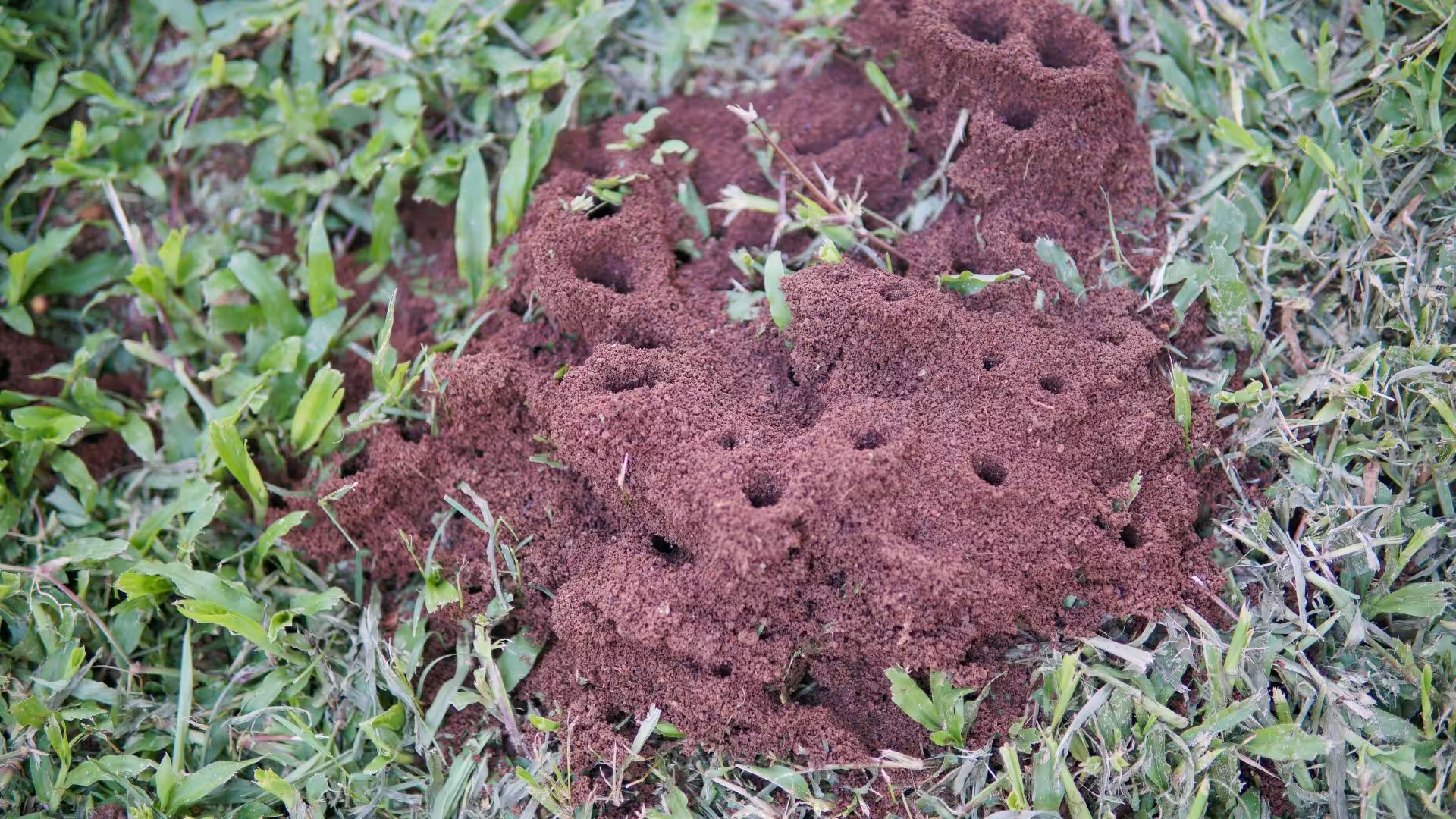
- Fire ants: Reddish-brown ants measuring 1/8 to 1/4 inch that build visible dirt mounds and deliver painful, venomous stings causing pustules and allergic reactions
- Carpenter ants: Large black ants (up to 5/8 inch) that excavate wood to build nests, causing thousands in structural damage without eating the wood itself
- Pharaoh ants: Tiny pale yellow ants (1/16 inch) that contaminate sterile environments and spread disease, particularly problematic in medical facilities and food service
Red ants aren’t always fire ants, though people often use the terms interchangeably. Many harmless ant species display reddish coloring. True fire ants exhibit aggressive behavior when their mounds are disturbed, swarming and stinging repeatedly.
Black ants include both carpenter ants (which damage structures) and odorous house ants (which only contaminate food). Size helps distinguish them—carpenter ants dwarf most other species. When you see large black ants near wood structures, investigate immediately for damage.
Are ants harmful to humans based solely on appearance? Not necessarily. Proper identification requires examining size, nesting behavior, and colony location. Our ant exterminator team recognizes subtle differences that determine whether you need emergency treatment or routine pest control.
When to Call an Ant Exterminator
Some ant problems require immediate professional intervention. Others respond to basic preventive measures and over-the-counter products. Knowing the difference saves you money and protects your home from escalating damage.
Contact an ant exterminator when you notice these warning signs. Fire ant mounds anywhere on your property demand immediate attention because stings pose medical risks, especially for children and pets. Multiple ant trails throughout your home indicate established colonies that won’t disappear with surface treatments.
Ants near wooden structures suggest potential carpenter ant activity. These pests excavate galleries that weaken beams, joists, and framing over time. Small piles of sawdust near baseboards or windowsills confirm active tunneling.
Persistent infestations that return after DIY treatments mean you’re addressing symptoms while colonies thrive elsewhere. Professional ant control locates and eliminates the source rather than just killing visible workers.
Large-scale invasions with thousands of ants warrant professional assessment. When ants overwhelm your ability to manage them through routine cleaning and basic treatments, you’ve crossed the threshold where expertise and commercial-grade products become necessary.
Kitchen invasions where ants contaminate food storage areas create ongoing health concerns. While you can remove contaminated items, professional treatment prevents continuous recontamination cycles.
Professional Ant Control Solutions
Sentinel Pest Control offers flexible treatment options designed to address different ant species and infestation levels. Our programs provide comprehensive protection against household ants and the other pests that commonly invade Western Washington homes throughout the year.
- SafeHome™ Program: Regular treatments control ants, rodents, spiders, cockroaches, moths, earwigs, centipedes, millipedes, and indoor fleas
- SafeHome Plus™ Program: Adds coverage for stinging insects and other difficult pests requiring specialized, long-term treatment approaches
- CustomCare™ Program: Custom solutions including attic clean-outs, exclusion work, bird prevention, and one-time treatments for termites or beetles
These structured programs deliver transparent pricing with clear service expectations. When you schedule ant control with Sentinel, you’ll know exactly what we cover and how often we visit your property.
SafeHome™ handles typical residential ant pressure effectively and includes protection against the most common household pests. SafeHome Plus™ makes sense for properties facing fire ants or other dangerous species that require intensive, ongoing treatment.
CustomCare™ provides flexibility for carpenter ant infestations that demand structural repairs alongside pest elimination. This option addresses specialized needs without requiring ongoing service commitments.
Don’t let ant problems escalate into health hazards or structural damage. Contact Sentinel Pest Control today for professional ant exterminator services. We identify species accurately, implement targeted solutions, and guarantee results that protect your Western Washington home.