
Ants are some of the most organized insects on the planet. They live in highly structured colonies, follow strict roles, and work together with impressive efficiency. Yet for many homeowners, one ant behavior stands out as both unsettling and puzzling. Seeing ants carry dead ants across floors, sidewalks, or countertops often sparks discomfort and concern.
At the same time, this behavior is more than a strange curiosity. It reveals how advanced ant colonies really are. It also provides important clues about what may be happening near your home. In this article, we will explain why ants carry dead ants, what it means for nearby colonies, and why professional ant control matters for homeowners across Washington.
Why Do Ants Carry Dead Ants?
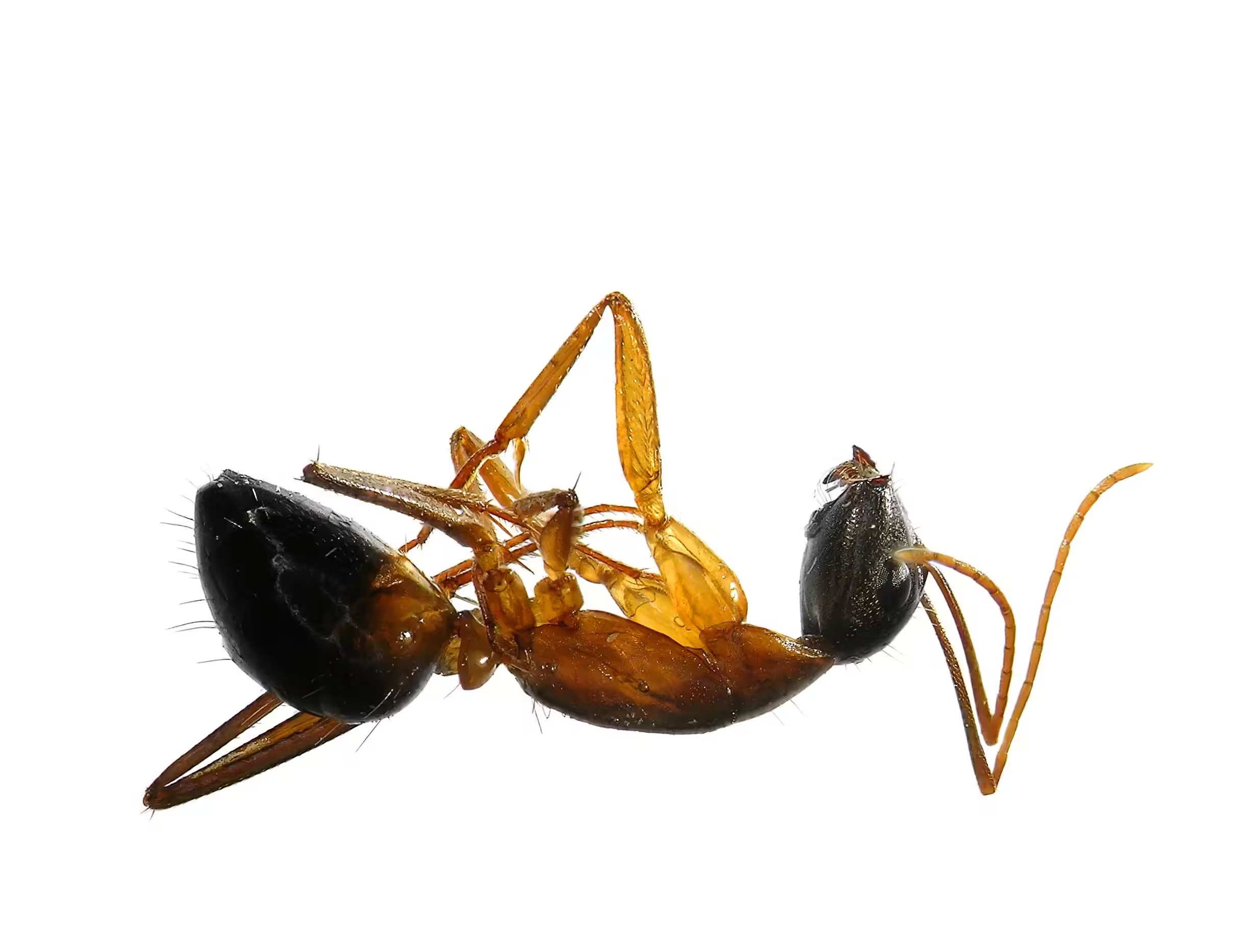
Ants live in tightly packed colonies where cleanliness is essential. Because thousands of ants share limited space, even minor health threats can quickly become deadly. For this reason, ants practice a behavior known as necrophoresis, which refers to the removal of dead colony members.
When an ant dies, its body releases a chemical called oleic acid. This compound acts as a signal that triggers removal behavior. Once detected, worker ants immediately carry the body away from the nest. This response is automatic and highly reliable.
This behavior supports colony survival in several important ways:
- It reduces the spread of bacteria and disease
- It protects the queen and developing larvae
- It helps maintain a clean, functional nest
In crowded environments, sanitation is critical. Without it, entire colonies could collapse.
What Is an Ant “Midden”?
Ants do not discard waste randomly. Instead, they create designated disposal areas called middens. These areas function much like a cemetery or garbage dump for the colony.
Middens typically contain dead ants, leftover food particles, and other nest debris. By keeping waste away from living areas, ants reduce contamination risks. This separation is especially important for safeguarding the queen and young ants that remain deep inside the nest.
For homeowners, the presence of a midden near a structure often indicates that a nest is close by. While the waste is outside, the colony itself is usually nearby and well established.
The Role of Ants’ Complex Communication Systems
Ants rely heavily on chemical communication. Instead of using sight or sound, they interpret pheromones to coordinate nearly every task. These signals guide foraging, defense, and waste management.
Oleic acid plays a unique role in this system. Once ants detect it, they interpret the signal as an urgent command to remove the body. Research has shown that ants may even remove living ants coated in oleic acid. In those cases, chemical cues override visual information entirely.
This system allows colonies to remain highly efficient and coordinated. Unfortunately for homeowners, that same efficiency makes ant infestations persistent and difficult to eliminate without expert intervention.
What Does This Behavior Mean for Homeowners?
When ants are seen carrying dead ants, it often indicates a mature colony nearby. This activity reflects organized maintenance rather than random movement.
For homeowners, this behavior may suggest:
- An established nest close to the structure
- Regular foraging routes through the home
- Long term ant activity rather than a temporary issue
If this behavior occurs indoors or near entry points, it is often a sign that ants have already settled in. At that stage, infestations can escalate quickly if left untreated.
How Ant Colonies Expand Over Time
Ant infestations rarely remain small. Scout ants constantly search for food and water sources. Once resources are located, pheromone trails form and worker traffic increases.
As colonies grow, reproduction cycles accelerate. Some species expand through budding, where part of the colony splits off to form a new nest. This is especially problematic when improper treatments disturb the colony without eliminating it.
What begins as a minor issue near a sink or baseboard can spread throughout an entire property. Early, targeted action is key to preventing long term infestation.
Why Do Ants Invade Homes?
Ants enter homes to meet basic survival needs. Food, moisture, and shelter draw them indoors, especially when outdoor conditions become unfavorable.
Drought can push ants inside in search of water. Heavy rain or flooding can also force colonies to relocate. Inside homes, kitchens, bathrooms, garages, and baseboards offer easy access to resources and hidden nesting areas.
Once ants find consistent food or moisture, they often remain permanently. Without proper treatment, infestations tend to return again and again.
Common Types of Ant Infestations
Washington’s climate allows ants to stay active for much of the year. However, different species behave differently and require different control strategies.
Common household ants include ghost ants attracted to sweets and moisture, carpenter ants capable of causing structural damage, aggressive fire ants with painful stings, and invasive bigheaded ants that form large colonies. Because treatment methods vary by species, proper identification is essential for lasting results.
Prevention vs. Professional Treatment
Prevention is always easier than eliminating a large infestation. Clean kitchens, sealed entry points, and moisture control can help reduce risk. However, once ants establish hidden nests, these steps alone are rarely enough.
DIY treatments often fail because they do not reach the colony or queen. In some cases, incorrect methods trigger budding and make the problem worse. Professional pest control focuses on eliminating ants at the source, reducing the risk of spreading and reinfestation.
Tailored Ant Control Solutions
Effective ant control is never one size fits all. Each infestation requires a customized approach based on species, environment, and structure.
Professionals evaluate seasonal conditions, weather patterns, entry points, and nesting locations. Treatments focus on long term prevention rather than short term relief. The goal is to eliminate colonies completely while protecting the home from future invasions.
Professional Ant Control from Sentinel Pest Control
Ants are complex, persistent, and highly organized. While their behavior is fascinating, infestations can quickly disrupt comfort and safety. Without expert care, ant problems often grow and return.
Sentinel Pest Control provides professional ant control solutions throughout Washington. Our services focus on long term protection and peace of mind for homeowners and businesses.
Our services include:
- Ant inspections and identification
- Targeted ant treatments
- Colony and queen elimination
- Perimeter and barrier protection
- Ongoing pest prevention plans
- Residential and commercial pest control
We proudly serve:
- Auburn WA
- Renton WA
- Tacoma WA
- Kent WA
- Seattle WA